



White paper on transforming cancer care by 2040 Banner Image White paper on transforming cancer care by 2040 Banner Image

White paper on transforming cancer care by 2040: A roadmap to equitable, innovative and sustainable solutions


Transparency Disclaimer: The development of this white paper has been led by AstraZeneca, with the support and consultation of an expert group in the field of oncology. The expert group provided input throughout the process, including guidance on the paper’s direction, content, and recommendations. The views expressed in this paper reflect a collective assessment of the current and future landscape of cancer care and are intended to inform and support ongoing efforts in the field. However, the final content and recommendations are those of AstraZeneca, and they do not necessarily reflect the official position of the expert group or any affiliated institutions. Please note that some of the technologies mentioned in the white paper may not be available in certain countries and its effectiveness may not have yet been proven or established in clinical trials.

Table of Contents

Acknowledgements

References


Chapter 1: The economic case for transforming cancer care

Although cancer care outcomes have improved in recent years, the disease continues to claim millions of lives each year. In 2022, an estimated 9.7 million people died from cancer, a figure projected to rise to 15.3 million annually by 2040.1 Consequentially, cancer exerts a significant burden on individuals, health systems and society.8 Tackling this challenge requires bold investment in healthcare infrastructure, innovative technologies, and equitable access to cutting-edge treatments. This investment needs to get ahead of future trends, not just grow in line with cancer prevalence.

The emergence of novel technologies creates a strong case for a paradigm shift in cancer care to prevention, early diagnosis2,16 and holistic care212 rather than the traditional focus on late-stage treatment. This will require a shift in strategic investment, which recognizes the balance of upfront costs with the long-term return from patients regaining health and independence and continuing to contribute to society and the economy.

Now is the time to make the right investments – with cancer budgets having a quota on both current and future investments in early diagnosis, precision therapies and holistic support – to create a future where cancer patients not only survive but thrive – living longer, healthier lives with access to the highest quality care. This section explores the multifaceted economic and social burden of cancer as well as the potential gains of making these investments.

Fact sheet

The societal burden of cancer

Read morearrow-icon

The growing economic burden of cancer

  • Direct healthcare spending and out-of-pocket costs (OOPs): Cancer treatment constitutes a significant portion of healthcare expenditures, placing immense pressure on national health budgets and directly impacting patients.3 Across high income countries (HICs) cancer patients and caregivers spend on average 16% of their income on OOPs, whilst in LMICs this increases to 42%.4 This results in ‘financial toxicity’ – the financial impact of cancer on patients and their families, which often disproportionately affects those from socioeconomically deprived backgrounds and leads to both poorer financial and health outcomes.5,6
  • Direct welfare costs: Cancer incurs substantial direct costs for welfare systems as patients are unable to work and often require unemployment benefits, disability support, and other forms of social assistance.7 This heightened financial insecurity can affect whole families.7
  • Productivity losses: Cancer also has a profound impact on economic productivity due to patient’s extended absences from work and reduced capacity due to the physical and emotional toll of the disease. Across the OECD, an additional 160,000 cases of depression are recorded every year due to cancer and productivity losses affect the equivalent to 3.1 million workers.8 The economic impact from productivity loss is likely to continue to grow, as early onset cancer continues to increase – with deaths from early onset cancer rising by 27.7% between 1990 and 2019.9
  • Societal impact of cancer: The societal impact of cancer is significant and can last through generations, especially when considering the trauma of losing a family member.10 An analysis performed in Australia demonstrates that with every $1 invested in treatment to improve the prognosis of a non-curative cancer diagnosis, $3.06 of social and economic value is gained.10
  • Indirect widening of health disparities: Cancer also exacerbates social inequities, disproportionately affecting low-income, marginalized, and rural communities. In LMICs, it is estimated that between 49% and 54% of childhood cancers go undiagnosed,11 which is likely linked to barriers in access to early detection and effective diagnostics.11

Fact sheet

The economic burden of cancer

Read morearrow-icon

Fact sheet

The health system burden of cancer

Read morearrow-icon

The case for investment in cancer system transformation

There is a strong economic case to be made for shifting the cancer treatment paradigm to prevention and early diagnosis where the chances of cure are higher. This would focus cancer care in 2040 on prevention, early detection, personalized treatments, and long-term support for survivors. Innovations in these areas are discussed in more detail in Chapters 3-6. The value of this investment in health is recognized by many countries, even though the return may take years – even decades – to be quantifiable. With up to half of all cancers being considered preventable,12 detecting cancer early can provide an even quicker (if smaller) return by increasing the chances of successful treatment,13 reducing the costly burden of treatment side effects,14 and decreasing the cost of treatment by two to four times versus late-stage treatment.15

Emerging technologies, such as liquid biopsies and targeted therapies, offer transformative potential for cancer care and treatment efficiency.16,17 Liquid biopsies, for example, are rapidly gaining attention for their potential to revolutionize cancer care across multiple stages—from early detection and screening to ongoing monitoring of disease progression.18 This can enhance advancements in personalized medicine and targeted therapies, which have strong potential for reducing long-term costs by lowering recurrence rates19 and hospitalizations.20 Whole genome sequencing (WGS), once considered expensive,21 is now approaching the cost of routine genetic tests for leukemia.22 However, it is important to identify those cancers or genetic subsets which will be most amenable to genetic testing and subsequent precision treatment, for example 40% of colorectal cancer patients have a particular gene mutation which would be a potential target for precision treatment.23 Limiting drug prescriptions and reimbursements to patients with the highest treatment response potential would generate additional economic advantages.24

Beyond the direct medical benefits of new technologies, helping cancer survivors return to work and maintain productivity represents a significant yet difficult-to-measure economic gain. We must provide better support, such as rehabilitation programs, mental healthcare, and workplace adjustments, to enable survivors to reintegrate into the workforce and contribute to society. However, strong governance is essential to fully capitalize on these advancements, and implement the infrastructure needed. These should be adaptive governance models, which can anticipate future need and balance the sometimes-competing mandates of oversight and innovation.

Fact sheet

Return on investment in cancer care

Read morearrow-icon

Scenario planning

Policymakers and healthcare leaders who succeed in finding available capital to fund investments will then need to clearly and credibly articulate the financial returns they expect their investments to generate. To support this and help frame our collective call to action to transform cancer care, we have developed three illustrative and hypothetical scenarios, which are described below (Figure 1). These scenarios are entirely based on assumptions and are not based on any hard data. In a second phase of work, building on this white paper, a calculator will be developed that can be used by a country or region to model the return on investment for the most promising technologies in health system transformation.

Figure 1.

Hypothetical scenarios depicting the trends in healthcare expenditure and 5-year patient survival, between 2025 and 2040, based on the level of transformation in cancer care.

Healthcare expenditure

Healthcare expenditure

5 Year survival

5 Year survival

Flatline future scenario
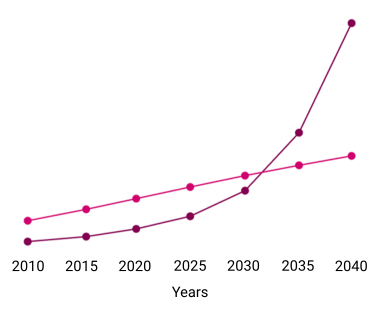
Representing no significant change in status quo or innovation adoption

The first scenario reflects a Flatline Future Scenario, representing minimal change in cancer care. This illustrative scenario shows 5-year survival rates increasing only marginally along current trend lines, healthcare expenditure rising exponentially without corresponding improvements in outcomes, and productivity in cancer care remaining stagnant. Healthcare systems struggle to meet increasing demand from an aging population and rising cancer rates, with insufficient growth in specialist workforce and system capacity. This approach provides a baseline against which more innovative scenarios can be compared, highlighting the potential consequences of failing to adopt new technologies and approaches in cancer care. It also serves as a cautionary projection, and emphasizes the need for continued investment and innovation in oncology to avoid such a flatline future.

Incomplete transformation scenario

Reflecting some transformation with partial adoption of innovations
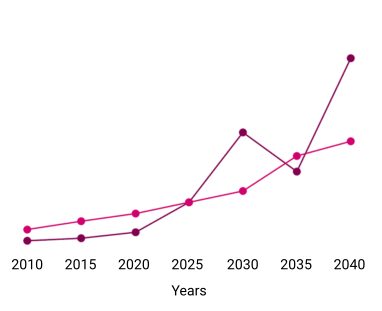
An Incomplete Transformation Scenario reflects partial adoption of innovations, resulting in uneven progress across different populations and aspects of cancer care. This scenario would show some improvements but also persistent disparities. While 5-year survival rates and productivity metrics improve for those with access to advanced care, especially in urban and higher-income areas, these gains are not equitably distributed. Economic disparities persist leaving lower-income and rural patients behind. Demographic changes, such as an aging population and rising cancer incidence, further exacerbate these inequalities, underscoring the need for more equitable policies and resource distribution in cancer care.

Complete transformation scenario

Indicating rapid progress and widespread adoption of cutting-edge innovations

Complete Transformation Scenario indicates rapid progress and widespread adoption of cutting-edge innovations, underlined by the principles of precision prevention and holistic long-term care that go beyond cancer care alone, leading to significant improvements in outcomes. This transformation results in exponential increases in 5-year survival rates, particularly for hard-to-treat cancers, while reducing healthcare costs over time due to more efficient, targeted treatments and streamlined processes enabled by artificial intelligence (AI) and advanced technologies. Equitable access to personalized medicine ensured through subsidies and policies, reduces demographic disparities in survival rate. Healthcare systems undergo comprehensive improvements, with increased investment in infrastructure and workforce development, allowing specialists to manage larger patient populations effectively. Economic factors support this transformation through expanded insurance coverage, patient-centered financial policies, and optimized resource utilization, creating a sustainable and equitable cancer care ecosystem.

This white paper describes and makes recommendations on where policymakers could invest to help make the complete transformation scenario a potential reality in 2040.


Chapter 2: System governance

To improve outcomes in cancer care and ensure innovations deliver their full potential, a strong governance model is required – underpinned by comprehensive, evidence-based, transparently monitored and well-funded national cancer control plans (NCCPs).25,26

NCCPs are an increasingly frequent form of governance used by cancer planners,27 promoted by the World Health Organization (WHO)28 and the Union for International Cancer Control.29 They provide a roadmap for cancer prevention, detection, diagnosis, acute and long-term treatment, support for survivors, and palliative care.30 However, the quality, adherence and funding of NCCPs is highly variable between and within countries. In the EU, for example, only one third of NCCPs addressed all areas of cancer care, only 27% included financing strategies and 50% lacked reference to radiotherapy strategies, demonstrating disparities in treatment access.31 These gaps often result from unachievable goals, lack of robust costing and implementation frameworks, and budgets that fail to support guideline-concordant care.27

By 2040, we envision cancer governance as agile, collaborative, and innovative, underpinned by digital-first, data-driven, and adaptable frameworks. NCCPs should be comprehensive, dynamic and infrastructure focused. To achieve this, we must move beyond the limitations of today’s short-term policy cycles32 to a future-focused governance model, with plans supported by horizon scanning to enable planners to keep pace with advancements in care and to ensure no patient is left behind. These NCCPs must be supported by strong health systems supported by key pillars – service delivery, health workforce, health information systems, access to essential medicines, financing and leadership/governance. These pillars were drawn from the WHO’s Health Systems Framework33 and have been discussed in more detail below.

Fact sheet

Governance – The role of National Cancer Control Plans (NCCPs)

Read morearrow-icon

Fact sheet

Governance – Implementation of NCCPs

Read morearrow-icon

Data infrastructure and collection

Data collection: Effective data collection is essential to understand cancer and prognosis, understand health inequalities, evaluate current practices and develop better treatments.34 Yet the rich real-world data which exists in electronic health records (EHR) is difficult to access.35 LMICs in particular face challenges in establishing robust cancer registries, due to the fixed and labor costs associated with developing these.36 This paucity of data can result in inaccurate estimates of cancer incidence, with only 1 in 5 LMICs having sufficient quality data.37 These gaps can hinder efforts to analyze trends to inform approaches for cancer control.36

Case study

AU: Cancer screening registers

Read morearrow-icon

Data security and privacy: Technologies, such as those which use AI and analyze large amounts of patient data, need strong governance over data sharing, security, and ownership,38 due to the need to access sensitive health information.39 Data should be shared responsibly and securely – through encryption, anonymization, and clear policies on data ownership – to build public trust, help patients retain control over their health data, and contribute to advances in research.40

Case study

AU: Creating a healthcare data platform

Read morearrow-icon

Data interoperability: The future of cancer care depends on a robust, interoperable data infrastructure that connects disparate data sources – such as data from governments, hospitals, academic institutions, wearable technologies, and consumer apps.41 This interconnected system is essential to harness the power of data in advanced clinical decision-making, empowering patients to be more involved in their care, streamlining the evaluation of treatments based on real-world data, and supporting value-based healthcare by simplifying cost assessment.40,42

Case study

US: Facilitating data collection from electronic health records

Read morearrow-icon

Fact sheet

System governance – Data and infrastructure

Read morearrow-icon

Planning, transparency and accountability

Cancer plan framework: Every country should secure political commitment to establish its own long-term transformational project for cancer care, which aligns with major national health goals – whether that means charting a path towards curing cancer, building greater resilience and sustainability in healthcare, or reducing equity gaps in access and outcomes. Discussions with the expert group suggested that this could be supported by comprehensive horizon scanning, as occurs in Canada,43 and a fully funded 10-to-15-year NCCP, equipped with robust implementation metrics and ongoing evaluation. To drive tangible progress, it was proposed that the plan should be implemented through a series of medium-term (3-to-5-year) action plans – ‘ground shots’ – which lay out the practical steps needed to achieve the long-term vision.

Case study

BR: National cancer committee/institute

Read morearrow-icon

Case study

FR: Cancer Plan

Read morearrow-icon

Case study

CN: Commitment to tackling cancer

Read morearrow-icon

Accountability: Many existing NCCPs suffer from insufficient oversight and a lack of shared responsibility among key stakeholders.30
A blended model of accountability, where elected officials, health system administrators, service providers, academic institutions, industry representatives, and patient groups collaboratively develop and execute a comprehensive cancer strategy, could help address these gaps whilst ensuring a diverse range of perspectives and expertise. For this to be effective a named cancer leader needs to be responsible for the development and adoption of the plan.

Case study

EU: Cancer Mission Hubs (ECHoS)

Read morearrow-icon

Case study

EU: PCM4EU

Read morearrow-icon

Case study

Global: QUAD cancer moonshot initiative

Read morearrow-icon

Case study

NO & SE: Multi-stakeholder leadership

Read morearrow-icon

Transparent monitoring and reporting: To maintain accountability and transparency, regular reporting on performance metrics should be a fundamental aspect of any framework.44 Data should be collected to monitor key performance indicators for NCCPs, health systems, and specific care pathways. Actionable insights can be drawn, through the integration of AI, to inform the development and implementation of NCCPs, whilst regular performance reviews can foster greater public trust.45 Real-time monitoring and reporting also aids equitable decision making, allowing elected officials and system administrators to reallocate resources where they are most needed. Several European Union Member States, through initiatives like Europe’s Beating Cancer Plan, have established annual reporting mechanisms to transparently report on progress against measurable targets.46

Case study

EN & CH: Patient experience surveys

Read morearrow-icon

Case study

Global: Cancer performance indicator

Read morearrow-icon

Case study

HR: Cancer plan

Read morearrow-icon

Building capability and capacity in healthcare infrastructure & workforce

Digitally assisted sampling and analysis: As technologies – such as WGS, liquid biopsy and AI assisted pathology – become better at informing early cancer detection and treatment, health systems will need to establish highly integrated and productive sampling, data collection and storage, analysis, monitoring, and communication capabilities to:48,49

  1. Collaborate with other experts in real time49 and leverage global partnerships as seen between the UK and Australia in radiology diagnosis, providing an out of hours service50
  2. Generate diagnoses for rare and complex diseases51
  3. Increase the quality and efficiency of diagnostics as well as facilitate patient engagement52
  4. Increase compliance with clinical practice guidelines, through integration of guidelines into electronic health record systems53

An expanding role for primary care: Primary care providers are essential in identifying cancer symptoms, referring patients for specialist investigation and supporting lifestyle modification to reduce NCD risk.54 As the focus on early detection intensifies, primary care’s role must expand, to incorporate more sophisticated tools like genetic profiling and AI-powered decision support systems to more efficiently refer high-risk patients to screening and specialized care.55,56 To support this shift, training programs for primary care professionals must be reconfigured.57 The role of healthcare professionals out-of-hospital can also extend to community care. In England, several cancer alliances carried out a pilot which allowed pharmacists to directly refer for scans patients they thought may have cancer.58

Reconfiguration of workflows: As healthcare shifts towards more digital and technology-driven models59 workflows must adapt. In pathology labs, for instance, the advent of digital pathology and AI-powered image analysis will fundamentally change the way labs operate.60 New roles will emerge, such as technicians who manage and photograph digital slides for AI analysis,61 allowing for more efficient workflows and faster diagnoses, reducing the time patients wait for critical results. Supporting this transformation will require not just retraining, but also a reimagining of shift patterns and cross-jurisdictional collaboration.

Emerging role of data experts: As healthcare systems become more reliant on AI and machine learning to interpret vast amounts of patient data, roles such as data scientists, bioinformaticians, and AI specialists will become increasingly integral to day-to-day operations.62 These professionals can support clinicians by ensuring accurate data analysis and by helping to develop personalized treatment plans.

Upskilling patient navigators: Patient navigation will be key as care pathways become more complex with the introduction of advanced treatments, like immunotherapy and precision medicine. Patient navigators help individuals understand their diagnosis, treatment options, and follow-up care, guiding them through complex medical systems and ensuring they receive timely interventions.63 As patients face being seen by multiple specialists, receiving multiple treatments and diagnostic tests, navigators will need to be well-versed not only in medical care but also in digital tools that help streamline communication between providers, schedule appointments, and track treatment progress.

Fact sheet

System governance – Workforce capacity

Read morearrow-icon

Case study

NO: Cancer clusters to promote knowledge exchange

Read morearrow-icon
 

Chapter 3: Personalized primary prevention

Cancer prevention focused on population-wide approaches addressing modifiable risk factors – such as tobacco control policies, dietary regulations and vaccination programs – has long been a cornerstone of public health efforts, driven by its proven cost-effectiveness and potential to significantly reduce the burden on healthcare systems.64 Research has shown that the incremental cost-effectiveness ratios of prevention efforts for breast cancer was $25,000, $24,000 for colorectal cancer and $34,000 for prostate cancer.65

However, approaches focused solely on modifiable risk factors do not fully account for all cancer deaths in the population.66 For example, we now know that one in ten cancers may run in the family.67 By 2040, our vision for cancer prevention efforts includes the use of advanced data and technology to empower individuals to actively reduce their personal risk from all risk factors. Following discussions with the expert group, we see this vision as needing to integrate clinical data, genetic profiles, and real-time personal health metrics – such as lifestyle behaviors and prior medical history – to allow for AI-driven predictive models that generate personalized prevention plans. However, as cancer prevention strategies are increasingly invested in and adopted across health systems, it is critical to ensure that these advancements do not exacerbate existing health inequalities.68 Socioeconomic factors already play a major role in cancer survival, and without deliberate efforts to address disparities, personalized prevention could widen the gap.69 In this chapter, we explore the evolution of cancer prevention, the role of technology in shaping its future, and the policy considerations needed to ensure equitable access to personalized prevention strategies.

Wearable-and-data-enabled risk assessment and lifestyle intervention

Wearables, like fitness trackers, allow people to have more control of their health wherever they are70 and can be used to monitor location and lifestyle data, which could then be used by an AI tool to model a person’s cancer risk, identifying and alerting those most at risk.71 These capabilities, however are yet to be developed. Investing in affordable innovations like smartphone apps and wearables could also have the potential to make personalized prevention accessible to more people.71 While, today, wearables such as glucose monitoring devices may be difficult to access in LMICs,72 the high use of smartphones and the trend of technological innovations becoming cheaper73 shows promise for widespread future use.71 As these technologies become more affordable, LMICs may be able to “leapfrog” some of today’s more inefficient interventions, which have been trialed in high income countries (HICs), in their prevention efforts. Furthermore, the challenge caused by digital exclusion and digital illiteracy, which tends to be more prominent in older people,74 is likely to be lessened as younger, more digitally literate generations become a larger part of the population.

Better identification and understanding of inherited cancer risk

Genetic testing is an important new frontier for cancer prevention, as patients with known familial cancer risk often struggle to access effective interventions within a healthcare system primarily designed to treat, not prevent, cancer.75 As the cost of genetic testing decreases and more genetic data becomes available, we will be able to identify even more genes that cause cancer (“oncogenes”) and the specific types of cancer they are linked to.76 However, for genetic testing to truly benefit patients, it is essential to have robust genetic counselling services in place77 to ensure patients have the support to understand their results, interpret the implications for their health, and make informed decisions about preventive measures.77 By 2040, as knowledge of oncogenes expands, people with identified genetic risks may seek risk-stratified screening programs and effective, personalized cancer prevention interventions, supported by accessible genetic counselling.

Case study

Global: Accounting for genetic risk in breast cancer risk prediction models

Read morearrow-icon

Case study

Global: Using machine learning to predict disease

Read morearrow-icon

Population based whole genome sequencing (WGS)

WGS allows us to analyze multiple genes and create a person’s polygenic (or multi-gene) risk score, which captures part of an individual’s genetic susceptibility to cancer.78 These risk scores could help streamline current screening programs to those with high polygenetic risk.79 Before WGS can be offered to entire populations, we need to demonstrate why this technology can provide better data than family medical histories or previous genetic tests. Strict guidance will also be necessary on when WGS should be performed – for example, while some newborns are screened for rare diseases,80 it might be more useful to test for cancer risk in young adults. Implementation of WGS should also consider the social, cultural and legal context of a country as genetic discrimination and stigmatization are feared by individuals with a genetic predisposition to cancer.81 While there are laws around genetic discrimination in some countries, such as the US, these are not necessarily widespread.81,82 To ensure WGS benefits everyone, it must be implemented in a way that aligns with available resources. For LMICs, setting up large-scale genetic testing may not happen by 2040, given the lack of infrastructure and available funds.83 So, while WGS has a lot of potential, countries will need to assess if adopting for their entire population is a long-term investment worth making.

Case study

SE: Use of WGS to determine cancer risk and diagnosis

Read morearrow-icon

Case study

US: WGS of newborns

Read morearrow-icon
 

Chapter 4: Early cancer detection and precision diagnosis

Progress has been made in early cancer detection and diagnosis,16 however too many individuals still receive diagnoses at advanced stages, when treatment options are more limited and significantly more costly.84 In many cases, early-stage cancer presents without obvious symptoms, making timely diagnosis challenging.85 To address this global challenge, initiatives such as the Global Breast Cancer Initiative and the Cervical Cancer Elimination Initiative are driving efforts to promote earlier detection and improve outcomes.86,87

By 2040, we envision a world where all individuals at risk of developing cancer are proactively identified long before symptoms appear. Advances in genomic profiling, artificial intelligence, and digital pathology will help create personalized, efficient, and equitable diagnostic pathways, helping to ensure that high-risk individuals receive continuous monitoring, effective prevention strategies, and swift access to treatment.

However, as these innovations continue to evolve, it is essential to consider the challenges and risks associated with scaling up early detection programs, to ensure accuracy and accessibility for all populations. These include:

  • Overdiagnosis, which may result in non-threatening conditions being detected and treated unnecessarily, leading to emotional, physical, and financial stress for patients.88 As some cancers may be slowly progressive or not progressive at all,89 overdiagnosis can lead to distorted survival rates and create the illusion of progress.
  • Access disparities, such as when diagnostics are often not covered by insurance or require significant co-pays. In South Korea, NGS gene panel test requires 50% copay for advanced lung adenocarcinoma90 and in the US lung cancer screening requires prior authorization from Medicare.91
  • Quality control will become increasingly challenging as patient volumes increase.92
  • High costs of developing and implementing innovations may burden health systems when scaled to larger population coverage,93 especially in LMICs, where there are larger funding gaps.94
  • Outmoded health technology assessment which relies too much on overall survival (OS) as a measure for Health Technology Assessments (HTA), becomes a challenge for cancers which have improved prognosis and are diagnosed early, delaying reimbursement.95 This is discussed further in Chapter 7.

Fact sheet

Cancer care pathway: Diagnosis

Read morearrow-icon

As we look to understand how we can make the 2040 vision a reality, we identified several current and emerging technologies which have the potential to both accelerate and improve the accuracy and precision of cancer detection through genomic profiling.96 In this chapter, we explore the transformative potential of precision diagnostics and the key considerations for ensuring these advancements benefit patients globally.

New forms of early detection technology

AI-assisted digital radiology: AI is increasingly being integrated into digital radiology workflows to help doctors analyze images more quickly and accurately, increasing the volume of medical images that can be analyzed by one person.97,98 This technology is also useful in LMICs, due to the potential lack of specialist workforce,99 enabling faster, more accurate diagnosis. However, incomplete and poor-quality training data for AI models can lead to bias and inaccuracy in interpretation,100 it is therefore imperative that the radiology workforce is upskilled on the use of these technologies, and that high quality data sets representative of the local population are used to train AI assistants.101

Case study

AU: Adoption of AI in radiology

Read morearrow-icon

Total-body Positron Emission Tomography (PET) scans: This technology increases the geometric coverage of traditional PET scans which can increase sensitivity by a factor of approximately 40 for whole body imaging, or a factor of approximately 4 for single organ imaging, conferring greater ability to determine whether cancers have spread.102

Volatile organic compounds (VOCs): VOCs are chemicals that can easily evaporate into the air, including through a person’s breath or other bodily fluids.103 Researchers are exploring how the identification of these compounds in a sample given by a patient can serve as biomarkers to identify cancer earlier and non-invasively. This research is still in the early stages, and more studies are needed to confirm how reliable these methods are.104

Liquid biopsy for early detection and Multi-Cancer Early Detection tests (MCEDs): While tissue biopsy is still considered the gold standard for diagnosis due to its consistency and accuracy,132 liquid biopsy offers advantages as a rapid, non-invasive way of diagnosing cancer.105 Liquid biopsy detects different molecular markers in one’s blood or body secretions. These markers can reveal tumor-specific changes at an early stage, when tissue biopsy is not practical.106 MCED tests are a type of liquid biopsy which look for many cancers using a single sample, however their accuracy and performance is still being determined.107,108 The Liquid Biopsy Consortium is funding several studies around the efficacy of MCEDs for early cancer detection, although data so far suggests that its use as a screening method for colorectal cancer is not yet cost effective.109

Case study

EN: Galleri Multi-Cancer Early Detection (MCED) trial

Read morearrow-icon

Improving the models of early detection we have today

Expanding and strengthening existing screening programs: While many countries already offer screening programs, including for breast, cervical, colorectal110 and more recently lung cancer111,112,113 participation is often low and varies across regions, income groups, and demographics.114 For example, breast cancer screening rates of women aged 50 to 69 in Europe in 2022 vary from 83% in Denmark, to 48% in France and 28.5% in Slovakia.115 To improve participation programs need to be culturally appropriate, include community outreach116 and become more risk-stratified. Technology can help this, through telehealth, mobile screening units, and home-based self-sampling, as seen during the COVID-19 pandemic.117,118,119,120 Text messages and telephone calls should also consider local cultural contexts,121 as has been trialed in Ghana for breast cancer screening.122 Furthermore, digital twins (virtual copies of patients)123 could be used to risk-stratify screening approaches for high-risk populations, developing more personalized approaches.124

Case study

CA & SE: At-home colorectal screening tests

Read morearrow-icon

Fact sheet

Cancer care pathway: Screening and early detection

Read morearrow-icon

Hub-and-spoke diagnostic models: Specialized diagnostic and treatment centers (the hubs) are connected to smaller, local healthcare facilities (the spokes) which provide initial care and screening, while digitized images or diagnostic samples are sent to the remote specialist pathology hubs for analysis.125 Integration of telemedicine and mobile diagnostic units can increase capacity and broaden access to specialized diagnostic care, particularly for underserved populations in regions with limited healthcare infrastructure – for whom early detection services are currently difficult to access.125,126

Case study

NG, BR & IN: Diagnostics hub-and-spoke model

Read morearrow-icon

Community diagnostic centers (CDCs): CDCs provide diagnostics closer to home, including imaging and laboratory analyses, without needing to visit larger hospitals.127 This reduces travel barriers and significantly increases participation, particularly among underserved populations.127 CDCs can also streamline the diagnostic process, allowing for quicker results and facilitating timely referrals to specialists when needed.127

Digital care pathways: These solutions often involve creating a tool to guide healthcare professionals through each step of the diagnostic process, from initial patient evaluation to final diagnosis and treatment of a suspected cancer.128 They can help doctors offer guideline-concordant care, reduce delays, and improve communication between different members of a patient’s MDT, allowing them to offer more personalized care.128

Point-of-care diagnostic (POC) devices: Innovative portable devices for POC testing are revolutionizing cancer diagnosis and management by offering immediate, accessible, and accurate testing solutions.129 Unlike traditional diagnostic methods, which often require visits to specialized labs or hospitals and may involve long waiting times for results, POC devices enable testing to occur directly in community settings, primary care offices, or even in patients’ homes.130 These portable devices can quickly detect cancer biomarkers through small samples such as blood, saliva, or urine, delivering results within minutes or hours rather than days.131

Molecular profiling and phenotyping as a standard part of diagnosis

Liquid biopsies: Beyond early detection, liquid biopsies can provide substantial information around diagnosis, including the potential aggressiveness of a tumor, as well as the proliferation, migration and drug resistance of cancer cells.132 However, work still needs to be done to refine their sensitivity and specificity.133 Today, this technology isn’t readily available through routine care for all patients or even in different countries, due to funding and implementation challenges.134 In the case of the UK, to support wider scale testing there is a need to invest in building the appropriate health system and laboratory infrastructure.133 It is also key to demonstrate the potential cost effectiveness of this tool, compared to more traditional diagnostic methods. For example, in the UK, at a test cost of £100 there is approximately a 75% probability of a liquid biopsy test for brain cancer being cost-effective in primary care.135 Cost savings in treatment selection have also been observed in lung cancer.136

Proteomics and omics: Protein biomarkers are used in the early detection of several cancers and for ongoing monitoring or a response to a therapeutic intervention.137 Advances in proteomics technology means thousands of previously unexplored proteins can be assessed for their association to different cancers.138 This type of research can identify genetic variation within cancer cells of the same type of cancer, that traditional diagnostic methods might miss.139

Digital pathology: Through digitization, high-resolution images of tumor samples can be easily shared across regions, allowing pathologists from around the world to collaborate in real-time to provide a detailed diagnosis, even in remote and low-income areas.60 While this technology holds great promise, its widespread adoption requires significant investment in high-resolution scanners and data storage capacity. However, studies estimate cost savings of up to $12.4 million over 5 years, due to improvements in improvements in pathology productivity and histology lab consolidation.140

Case study

UK: Use of digital pathology in cancer screening programs

Read morearrow-icon

Computational pathology: Powered by AI and machine learning, computational pathology can further enhance the accuracy of digital pathology by analyzing digital images consistently and in a level of detail not visible to the human eye, helping to detect patterns or anomalies that humans may miss.38,47,141 For example, a study shows that it can reduce the time taken to review a sample by as much as 30%, while improving accuracy.142 To enable its widespread use, there is a need to increase access to new AI tools, high-speed internet and robust cybersecurity; to restructure workflows to add an AI assistant, and to provide training on working with AI to help increase the productivity of laboratory professionals.143

Quantum technologies: Quantum technologies in healthcare, including oncology care, is an emerging field with applications in precision diagnosis, including the analysis of genomic and omics data to reveal trends in cancer types.144 Quantum Boltzmann machines can identify nonlinear relationships between different types of omics data, enhancing our ability to analyze large, multidimensional datasets in precision oncology.144 Additionally, quantum technology can enhance medical imaging and provide comparable accuracy to current methods – researchers have used a quantum framework to analyze mammograms and automate the segmentation of images to identify abnormalities.145 By minimizing the need for annotated datasets (used by existing techniques), this method is time saving and could accelerate time to diagnosis.145

Monitoring (post-treatment surveillance)

MCED tests: MCEDs also hold the potential to detect recurrences in cancer survivors.146 Although the MCED concept is still under investigation, there is potential for LMICs to ‘leapfrog’ more expensive alternatives with the eventual adoption of these technologies.147

AI-driven predictive analytics: AI and machine learning can integrate diverse data sets to identify cancer recurrence using patterns that may otherwise be missed.148,149 For example, AI can pair continuous monitoring of vital signs by wearable devices with genomic data and imaging to create personalized predictions.150 As discussed earlier in Chapter 2, important ethical and regulatory issues need to be resolved before AI’s predictive capability can be safely and reliably maximized.

Case study

Global: Using AI to support chronic condition management

Read morearrow-icon
 

Chapter 5: Personalized treatment

Over the past 30 years, cancer treatment has undergone a dramatic transformation with innovations in immunotherapy, targeted treatments, chemotherapy, radiotherapy, and surgical techniques. These advancements have made treatments more effective and less physically taxing on patients.151,152,153,154 In 2040, cancer treatment has the potential to go further – becoming fully personalized and equitable, offering patients optimal outcomes with minimal side effects by avoiding therapies that may not be effective for certain cancer types.155

However, despite continuous innovation, progress in cancer outcomes has slowed due to persistent barriers in accessing novel technologies,156,157 creating inequalities both within and between countries, regions, and cancer types.158,159 In Europe, between 2019 and 2022, the median time to patient access to medicines varied from 1.5 months to over 2 years post market authorization.160 In LMICs, high costs, limited healthcare infrastructure, and shortages of specialized healthcare professionals further restrict access to the latest therapies, exacerbating disparities in cancer care.161

Emerging technologies and new models of care hold the potential to close these gaps and make personalized, augmented cancer treatment a reality. These are described in further detail within this chapter.

Fact sheet

Cancer care pathway: Treatment

Read morearrow-icon

Continuous treatment innovation

Targeted therapy: Today’s targeted therapies address many of the most common cancer mutations, which are used as biomarkers for targeted therapies. In Japan, the SCRUM-Japan GOZILA Project found patients who received targeted therapy based on the results of a liquid biopsy lived approximately twice as long as their peers.162 Because a cancer cell mutates further as it tries to adapt and survive a treatment, ongoing innovation is needed in targeted therapy to address the most common “resistance mutations”.163 To improve the outcomes from targeted therapy, ongoing genomic testing can be utilized to guide and adjust treatment and counteract the evolving nature of the cancer.164

  • DNA damage response: Every cell in our body needs to continuously repair the wear and tear of its DNA from everyday use.165 When oncogenes are mutated in the DNA of a tumor cell, that DNA is unable to repair itself.165 This is called a “repair deficiency” and can be used as a tool for targeted therapy.166 These treatments limit a cell’s ability to repair its DNA, thereby killing cancer cells with repair deficiencies.167

Radiotherapy: Over the past decade we have seen evolution in radiotherapy technology, with enhanced ability to precisely target tumors while minimizing damage to surrounding health tissues.168 New treatment strategies include hypofractionation which involves fewer but more intensive radiation sessions, and exploration of novel combinations with other traditional cancer therapies, such as immunotherapy.169,170

  • MR-LINACs: This method of radiotherapy integrates MRI imaging into lineal accelerators (LINACs) to allow MRI-guided radiation therapy, which ensures safer delivery and the ability to monitor tissues while the radiotherapy is being delivered.171 This might lead to a reduction in treatment time and less side effects for patients.172 In 2018, the Royal Marsden hospital in London treated the first UK patient with MR-LINAC therapy, helping to roll it out on a more global scale.173
  • Radioimmunotherapy: Recently, publications on radioimmunotherapy have increased, as the benefit of combining these two cancer treatments shows promise.174 Studies indicate the combined use of radiotherapy and immunotherapy can be more effective than either treatment alone.175 Its use has been investigated non-small cell lung cancer, esophageal and gastroesophageal junction tumors.176

Multimodal conjugates:

  • Antibody-drug conjugates (ADCs): These treatments conjugate (or link) a special protein called an antibody that binds easily to some cells (biomarkers) with a cancer-fighting chemotherapy drug.177 The antibody is designed to find and attach to cancer cells expressing a matching biomarker on their surface. Once the antibody attaches to the cancer cell, it delivers the drug directly inside, where it can effectively kill it. This limits the damage to healthy cells and, with some ADCs, helps to kill “bystander” tumor cells that threaten the patient but do not express a treatable biomarker.177
  • Radioconjugates: These therapies conjugate radioactive materials and special targeting molecules to attack cancer cells.178 The radioactive part releases radiation that can kill cancer cells, while the targeting molecules help guide the treatment directly to the tumor, sparing nearby healthy tissue.178

Immunotherapies:

  • Bispecific immunotherapies: These two-arm treatments work by targeting two different proteins at the same time, helping the immune system recognize and attack cancer cells more effectively.179 One arm of the bispecific antibody binds to a biomarker on the cancer cell while the other arm attaches to immune cells, helping the immune cell reach its target.179
  • CAR-T cell therapies: A patient’s immune cells, called T-cells, are modified in a lab to make them better at finding and attacking cancer cells.180 These therapies offer shorter treatment times and quicker recovery, although they require complex cell processing that limits access to them.181,182 These therapies can be autologous (using the patient’s own immune cells) or allogenic (using cells from a donor).183 Allogenic therapies provide an ‘off the shelf’ treatment as genetically engineered donor cells are stored in a cell bank waiting to be used.
  • Cancer vaccines: These are designed to help the body’s immune system recognize and attack cancer cells.184 While existing preventive vaccines address infections like hepatitis B or HPV that may cause cancer, new types of cancer vaccines will directly treat cancers.184 Much like today’s immunotherapies, they will train the immune system to target and fight cancer cells.184

Epigenetic therapeutics: While genetic alterations are permanent, epigenetic alterations can be reversed.185 Epigenetic changes tend to result from exposure to known risk factors like smoking and chronic inflammation stemming from causes such as hepatitis B.186 Genetics and epigenetics work together to turn healthy cells into cancer cells.187 New therapies are in development to re-program cancer cells back to healthy cells, whilst also holding the potential to improve the efficacy of existing anti-cancer treatments.185,188

Surgical techniques: The landscape of cancer surgery has been revolutionized in recent years, predominantly due to advancements in minimally invasive and precision surgical technology.189 Robotic technologies have aided surgical techniques, providing enhanced control and visual precision, resulting in less trauma to tissues, shorter stays in hospital, lower infection risks and fewer surgical complications.190 For example, when undergoing prostatectomy for prostate cancer, patients can leave the hospital the day following surgery.191

Drug repurposing: Developing new cancer therapies and technologies is a time consuming and expensive endeavor. Drug repurposing uses existing drugs for new indications and provides an exciting opportunity to circumvent these challenges and facilitate precision cancer treatment.192 Repurposing drugs as anticancer agents has been explored in prostate cancer for example.193

Case study

EU: Precision Cancer Medicine Repurposing System Using Pragmatic Clinical Trials, PRIME-ROSE

Read morearrow-icon

Digital twins: Digital twins are virtual replicas of patients, based on the integration of several sets of data from medical imaging, genomics and other clinical data points.194 Digital twins can act as predictive tools to understand how patients may respond to different types of treatment to make the most effective and safe treatment decisions.194 However, there are important considerations around the use of healthcare data for the development of digital twins, including obtaining informed consent, ensuring data ownership and navigating legal limitations.195 These aspects of healthcare data are further discussed in Chapter 2.

Case study

US: Innovative detection and treatment tools for cancer care in the US

Read morearrow-icon

Equity in access to innovation

To derive the benefits of these innovations, health systems must prepare for their rapid adoption, through the modernization of clinical trial protocols, regulatory frameworks, health technology assessment, and payment models.

Access to clinical trials: Limited access to clinical trials disproportionately affects minority populations, who are more likely to receive care at under-resourced hospital systems where few clinical trials are available.196 Since diversity in clinical trial participants is critical to precision medicine, broadening participation benefits not only patient participants but also the companies running the trials.197 To improve equity of access, trials must also take place in rural and remote areas, with new approaches to disseminate recruitment information, investment in infrastructure, and less stringent eligibility criteria that allow a wider range of people to participate, especially those with complex comorbidities.198 This disparity in access is not just observed within countries, but between HICs and LMICs, with only 43% of clinical trials for diseases that disproportionately impact people living in LMICs being carried out in LMICs.199

Fact sheet

Cancer care pathway: Clinical trials

Read morearrow-icon

Case study

APAC: Decentralized access to clinical trials

Read morearrow-icon

Case study

CN, JP, EU & US: Expanding access to clinical trials

Read morearrow-icon

Case study

US: Health equity report card

Read morearrow-icon

Regulatory sandboxes for AI: Ensuring that AI systems are reliable and accurate across diverse patient populations is complex, especially given the potential for biased or incomplete datasets.200 The “black box” nature of many AI models, where decision-making processes are not easily understood, adds further complexity.201 Since regulators tend to require a high level of transparency for approval, existing regulatory frameworks are not suited to the fast-evolving nature of AI technologies, leading to delays in their approval.202 Privacy and data security concerns, especially when handling sensitive patient information, also present significant hurdles.203 New regulatory sandboxes, where government supervise the deployment of new technology in the real world, in small-scale pilots, could help to speed up the adoption of new AI technologies. 204

Case study

UK: Regulatory sandbox on AI

Read morearrow-icon

Hub-and-spoke clinical trial model: A hub will collect information from all its spokes, enabling trials to cast the participant recruitment net much wider and potentially increasing the speed of research and development, especially for rarer cancers.205

Digital and telemedicine in clinical trials: Digital platforms and telemedicine can help mitigate geographical inequities by allowing patients to participate in trials without needing to travel to major research centers.206 Mobile health apps, wearable devices, and remote monitoring, also present opportunities to collect more accurate and complete personal health information from clinical trial participants remotely.207 Virtual recruitment tools, such as online registries, electronic health records and AI-driven matching algorithms, can help identify eligible patients more efficiently.208,209,210 AI can also enhance drug selection and adapt investigational drugs to the histology of a specific cancer, thus increasing efficacy.210 While this is an area of fast-paced innovation, there are important ethical concerns around data availability, standards, and a lack of appropriate regulatory frameworks that inhibit the speed at which AI can be used in drug development.210


Chapter 6: Holistic long-term support

Today, many individuals living with cancer face significant barriers to reintegrating into their normal lives during or after treatment, due to the wide reaching side effects of treatment.211 Survivorship care must go beyond the current focus on clinical treatment and standard care212 and access to less toxic therapies, to address the full spectrum of patient needs – physical, emotional, psychological, social, and financial. A fundamental shift is required to provide cancer survivors with person-centered, long-term support that helps them reclaim their personal, professional, and broader aspirations.213,214

Survivorship care should include ongoing monitoring for disease recurrence (as discussed in Chapter 4), managing long-term side effects, and providing access to psychological support, lifestyle guidance, and financial assistance.214,215 Many survivors also struggle with “financial toxicity,” requiring career counseling and workplace accommodations to maintain employment while managing health challenges.214,216 Future care models must embrace technology, telemedicine, real-time digital health monitoring, and decentralized care to improve accessibility and reduce dependence on specialized centers.217,218

By 2040, AI-powered tools, telemedicine platforms, and wearable devices will have the potential to transform survivorship care to provide continuous, personalized support beyond treatment. However, for these innovations to be effective, governments and healthcare systems must invest in holistic survivorship programs alongside novel treatments. Without this commitment, cancer’s impact will continue to extend far beyond diagnosis, affecting survivors’ ability to fully reintegrate into daily life and society.219 In this chapter, we explore how these technological enablers, along with new care delivery models, can shape the future of survivorship, providing cancer survivors with the comprehensive, long-term support needed to truly thrive.

Improved models of care delivery

Improvements in patient centricity: Patient-centric care remains largely aspirational in today’s healthcare systems, where many patients experience fragmented care and limited involvement in decision-making.220 In the future, technology will be key in making true patient-centric care a reality. Mobile apps, telemedicine platforms, and wearable devices can enable continuous, real-time interaction between patients and healthcare providers,221 allowing patients direct access to their health data and enabling active feedback loops.222 However, as discussed in Chapter 3, challenges like digital literacy, equitable access to technology, and disparities in care quality across different populations must be addressed.223

Case study

CA: Adoption of electronic pathway solutions

Read morearrow-icon

Case study

US: National Cancer Institute’s Community Oncology Research Program (NCORP)

Read morearrow-icon

Patient navigation programs: As survivors transition from active treatment to survivorship, they often face a complex healthcare landscape involving less cancer specialists, more primary care, ongoing screenings, a diverse set of rehabilitation providers, and permanent changes to their bodies that they may continue to struggle with physically and emotionally.224 Patient navigation programs provide personalized guidance to help survivors better understand the range of services available to them – with a review analysis showing they are crucial in improving access to care and optimizing treatment outcomes, especially for disadvantaged patients.63,225 These navigators assist with scheduling appointments, coordinating follow-up care, addressing financial concerns, and connecting patients to psychosocial support.63,225 However, they need to be tailored to specific needs, as research indicates that, for example, young people may have differing preferences depending on their developmental age.226

Case study

EU: App for cancer survivors

Read morearrow-icon

Case study

US: American Cancer Society (ACS) patient navigation support

Read morearrow-icon

Case study

Global: Digital emotional support tool

Read morearrow-icon

Case study

UK: Cancer Research UK’s support forum

Read morearrow-icon

Digital-and-AI-powered MDTs: MDT support has become a fundamental component of cancer care across most of Europe, North America, and Australia.227 However, barriers such as time constraints, heavy caseloads, and incomplete patient information can lead to suboptimal treatment.227 By 2040, MDTs must routinely include oncologists, geneticists, primary care physicians, mental health professionals, nutritionists, social workers, palliative care doctors, and data scientists to collaborate in real time to deliver efficient holistic support.228 This should leverage digital platforms to securely share patient data in real-time, streamlining communication between providers229,230 and AI tools to provide decision support to clinicians.231 Finally, telemedicine and remote monitoring technologies can enable more frequent information exchange between the MDT and patients, allowing MDTs to provide continuous, personalized support regardless of geographic location.229,232

Case study

Global: NAVIFY Tumour Board

Read morearrow-icon

Palliative care: Good quality end of life care for cancer patients is vital to avoid unnecessary suffering for both patients and their families. However, substandard palliative care is common due to a lack of structured guidelines.233 By 2040, palliative care should incorporate innovation and technology. Models which utilize digital health and community-based health workers have been shown to achieve positive outcomes, particularly in rural areas.234 Smart sensor technologies can collect comprehensive data and gain a greater understanding of a patient’s condition235 and provide continuous, less invasive symptoms management.235

Psychosocial support

Psychosocial telemedicine platforms: Telemedicine can enhance access by reducing barriers such as travel distance or scheduling conflicts for specialist care, especially for rural or underserved populations.236 This can also save costs for patients – with a US study showing that telehealth can save up to USD$186 per visit.237 These platforms can also be made available 24/7. Most clinicians interviewed during a survey agreed that telehealth increases access to (91.7%), and simplifies the process for patients to receive (79.2%) early integrated palliative care.238 Services such as emotional support, financial aid, education, and rehabilitation can all be offered online. For instance, virtual support groups, AI-powered counselling apps, chatbots, and online financial navigation are helping patients overcome barriers in their treatment journey.239,240,241

Case study

US: Memorial Sloan Kettering’s telemedicine platform

Read morearrow-icon

Economic and employment support

Adaptive and assistive technologies: Devices that mitigate cognitive and physical side-effects and impairments that patients have during and/or post-treatment, such as ergonomic tools or AI-powered software, can help people living with cancer improve their performance at work and at home.242,243 These technologies can also offer real-time monitoring, allowing employers to adjust workloads and expectations based on the survivor’s health.150

Employment support: This can include vocational retraining, flexible work arrangements, and other workplace accommodations.244 Digital platforms and AI tools can assist survivors by matching them with appropriate job opportunities and providing tailored career counselling based on their health status and professional goals.245 Furthermore, employers can help by implementing supportive policies, such as phased returns to work and remote working options.244

Case study

CA & NL: Supporting employment of cancer survivors

Read morearrow-icon

Financial support: Providing financial support not only alleviates the burden on patients but also improves health outcomes, by enabling patients to focus on their recovery rather than financial concerns.246 This includes financial assistance programs, subsidies for medications, and coverage for non-medical costs like transportation and caregiving.247 AI-powered tools could help assess a patient’s financial situation and match them with applicable assistance programs, grants, or subsidies for both medical and non-medical expenses.247,248 Survivors could receive real-time notifications about available aid, including coverage for transportation or caregiving costs, tailored to their specific needs.

Case study

US: Financial support for cancer patients

Read morearrow-icon

Blockchain-based healthcare wallets: This technology could streamline medical payments, ensuring transparency and security in transactions while reducing administrative costs.249 Additionally, digital platforms could help streamline access to financial aid for cancer survivors by integrating various resources into user-friendly, centralized systems.

Preventing financial discrimination: Many cancer survivors face discrimination in areas such as employment, insurance, and socialization, which can lead to feelings of isolation and hinder recovery and reintegration post-treatment.250 Legislation on genetic non-discrimination and the right to be forgotten both have the potential to mitigate financial toxicity for cancer survivors who can find themselves shut out of the labor market, denied health insurance, and refused bank loans.251,252 For example, France has introduced the right to be forgotten law, which gives cancer survivors the right to not disclose their past cancer diagnosis to medical insurers.253 France was the first country in the world to introduce such a law,254 since then only seven other European countries have implemented similar measures.254


Chapter 7: Cancer funding and financing

Cancer care financing is one of the most pressing challenges in global health, as the growing cancer burden and rising costs of innovation put immense pressure on healthcare systems worldwide. Financial toxicity affects patients in both HICs255 and LMICs, where limited resources and high out-of-pocket expenses create significant barriers to care.256 Alarmingly, only 27% of NCCPs include financing strategies.31 Often those NCCPs which do include resource allocation in NCCPs, lack detail around costing and calculations of funding amounts, which makes evaluating the effectiveness of these and their impact on cancer control challenging.257 Without strategic reforms, disparities in access to cancer prevention, early detection, and treatment might continue to widen, exacerbating health inequalities across regions.

By 2040, a transformation in cancer care financing will be essential to ensure equitable access to life-saving treatments and robust funding for preventive interventions. This will require fundamental reforms in HTA processes to enable cost-effective innovations to reach patients more efficiently. Integrating innovative financing mechanisms – such as outcome-based payment models, risk-sharing agreements, and public-private partnerships – alongside long term initiatives such as universal health coverage, is imperative for long term sustainability and improving patient care.272 In this section, we explore the evolving landscape of cancer financing, outlining key challenges and opportunities to build a resilient, patient-centered funding ecosystem.

Status quo of cancer financing globally

Cancer care financing differs significantly across countries, reflecting disparities in economic capacity and exacerbating inequality in cancer care.258 Global health priorities have also changed, for example, initiatives such as the sustainable development goals, which does include indicators on non-communicable diseases, has led to HICs such as the UK focusing funding on universal health coverage and supporting major third-party organizations like Gavi, rather than increasing funding for cancer control.259

HICs typically allocate a higher percentage of their gross domestic product (GDP) to healthcare. Public health spending ranges from 11.5% of GDP in HICs, to 5.3% in lower to middle income countries260 – a figure that might drop even further in LICs, where 5% is recommended as an aspirational target.261 In LMICs, due to these constrained budgets, access to both innovative and off patent essential cancer treatments is often limited by high costs and underdeveloped health insurance systems.262

Middle-income countries, such as Brazil, India, and South Africa, face distinct challenges as they work toward sustainable cancer financing.263 While these nations are experiencing economic growth, which is expected to contribute to enhanced healthcare infrastructure, access to medical services and improved cancer detection, it might also lead to a deepening in healthcare inequalities.263 These countries must balance domestic healthcare spending with economic growth and evolving disease burdens.

Approaches to sustainable cancer financing

Innovative financing models

As the financial burden of cancer care continues to rise and innovative treatments become more complex, efficient resource allocation is essential to ensuring sustainable and equitable access to treatments. Innovative financing models offer promising solutions that can help healthcare systems manage limited funds more effectively while maintaining high-quality care delivery. These innovative models include:

  • Payment-over-time models: These models allow the total cost of a therapy to be spread out over a year or several years, in installments.264 This is particularly useful for high-cost, one-time treatments like gene therapy.265 This is already a reality in some centers in Italy and at the level of individual sick funds in Germany.264
  • Outcomes-based payment agreements: In this model, payers agree to pay a price that is based on the results of future data, for example, as part of an ongoing clinical trial or as part of a post-marketing observational study (real-world evidence).264 A UK study found that data is frequently available to support agreements based on clinical outcomes, such as survival and disease progression, but that there is still limited ability to pay based on quality-of-life indications – such as ability to return to work, participate in social activities, reduce long-term side effects, and maintain financial health.266
  • Innovative medicines funds: These financial models are designed to ensure patients have access to cutting-edge therapies, even when their efficacy and cost-effectiveness are still under review.267 These funds, also referred to as ring-fenced cancer drugs funds, allow for early patient access to innovative medicines, while real-world data is collected to inform long-term funding decisions.267 For example, the UK established a fund of £680 million for the Innovative Medicines Fund (IMF)268 and Cancer Drugs Fund (CDF)269 – £340 million each – to fast-track access to innovative medicines.

Case study

IT: Innovative medicines fund

Read morearrow-icon

Case study

UK: Innovative medicines fund

Read morearrow-icon
  • Public-private partnerships (P3s): In some cases, governments partner with private companies on transformative initiatives.270 P3s allow governments to provide access to quality services without the need for large capital investments, as private and/or philanthropic organizations can handle construction, equipment procurement, and training.270 These partnerships can be anchored in outcome-based payment models, key performance indicators, and pay-for-performance schemes that incentivize the delivery of a high standard of care. These partnerships should aid a balanced approach to cancer financing which can prioritize prevention and early diagnosis alongside treatment, to reduce long term costs from late-stage diagnoses.15

Case study

BR, TH & IN: Licensing agreements

Read morearrow-icon

Case study

CA: Health impact investments

Read morearrow-icon

Case study

CO: Global financing initiatives

Read morearrow-icon
  • Pay per use models: For innovative technologies in oncology care such as robotic surgery or radiotherapy equipment, pay-per-use contracts may provide a more affordable way of expanding access for patients by transforming high upfront capital costs into more manageable operational expenses.271
  • Development impact bonds: These are an instrument where private investors provide initial funding for a program, and an outcome funder reimburses it back if targeted outcomes are met as a result of the investment.272 There has been an interest in these bonds to fund responses to NCDs and healthcare initiatives globally, for example in India.273

Case study

IN: Development impact bonds

Read morearrow-icon

A key advantage of these models is their ability to accelerate access and rollout of life-saving therapies, by linking payments to measurable health outcomes. This ensures high-cost treatments like gene therapies are more accessible while balancing financial risk between payers and manufacturers. Additionally, these models might complement existing funding mechanisms, extending public budgets through risk-sharing agreements and private-sector investment. This integrated approach enhances sustainability and expands access to critical cancer treatments.274

Nonetheless, the feasibility and scalability of these innovative financing models depend on several factors, including market readiness, infrastructure requirements and teams who can lead implementation.274 High-income countries with advanced healthcare systems may be better positioned to implement complex models like outcomes-based reimbursement or tiered pricing. In contrast, LMICs may benefit from simpler mechanisms, such as pooled procurement or public-private partnerships, which leverage shared resources to achieve cost efficiencies.

Rethinking and adapting HTA methodologies

HTAs are essential for guiding healthcare funding decisions, helping policymakers determine which treatments should be covered and reimbursed.275 However, traditional HTA frameworks often focus on overall survival (OS) as the main measure of a cancer drug’s effectiveness.276 While this makes sense for advanced cancers, where survival might be measured within a few years, it poses challenges for early-stage cancers, where patients may live for decades before the full benefit of a treatment becomes clear.277 As a result, many promising innovations may be undervalued simply because long-term survival data is not yet available.

Adapting HTA methodologies would not only improve access to life-saving oncology treatments but also spark investment in areas where innovation has the greatest potential to transform outcomes.278 By prioritizing patient-centered outcomes and the full spectrum of clinical benefits, these methodologies can drive sustainable financing decisions and ensure that patients benefit from the latest innovations in cancer care. Potential novel HTA approaches could include:

  • Oncology-relevant endpoints: By 2040, payers will need to find a way to effectively value other endpoints – such as progression-free survival (PFS), disease-free survival (DFS), event-free survival (EFS), and the pathological complete response (shrinkage) of a tumor (pCR).279 Health-related quality-of-life (HRQoL) data, especially patient-reported outcomes (PROs), can also provide an early indication that a treatment works.280 There is also work that can be done to go beyond quality-adjusted life years (QALYs), to understand the quality and quantity of life lived following the administration of a specific treatment and fully capture the experience of cancer patients and elements which may be important to them, such as how a treatment is delivered or how invasive it is.281
  • Lifetime value: HTA must begin to appreciate the full range of benefits a medicine or health technology can have on both society and on patients.282 Additional value elements which should be incorporated include the impact of disease on the broader communities than patients, which can include productivity – the reduction in losses of the market and non-market output from treatment of the disease.282 Incorporating these elements could enable HTA bodies to help governments understand the full and true value of reimbursement of innovative therapies.
  • Optimize integration of Real-World Evidence (RWE): RWE can play a key role in regulatory decision making, and offer a nuanced real world understanding of the performance of interventions beyond traditional clinical trial settings, such as randomized controlled trials.283 With bodies like the National Institute for Health and Care Excellence (NICE) in England outlining frameworks for its using RWE284 and calls to increase the use of RWE for HTA in Asia,285 its acceptability in HTA is increasing. However, there are still barriers to its use including limited data access, data quality, privacy and fragmentation.286 More comprehensive and reliable healthcare data collection at a national level will be required.
  • Limited focus on diagnostic innovations: HTA tends to be most advanced and established for pharmaceuticals, rather than medical technologies and diagnostics. 287,288 This is despite the fact diagnostics and medical tests could improve patient outcomes through improving accuracy at reduced costs and simplify healthcare delivery through access, diagnostic yield and reduction in time to diagnosis.288 In oncology, for example, liquid biopsies have the potential to have a significant impact on care by identifying cancers early.18 However, there are challenges in evaluating diagnostic tests for HTA as a result of reliance on indirect rather than direct evidence of effect.289 By evolving HTA methodologies to value innovation, including diagnostics, through multicriteria decision analysis and tools such as horizon scanning, healthcare systems can accelerate the adoption of these groundbreaking technologies.289
  • Static cost-effectiveness thresholds: Many HTA systems use rigid cost-effectiveness thresholds that fail to account for healthcare innovation’s dynamic and evolving nature.290 There are a number of dynamic value elements which could aid a more comprehensive HTA.282 This includes dynamic net health system costs which considers how the costs of a drug’s price may change and become cheaper due to generics, dynamic disease prevalence account for changes in the prevalence of a condition affect treatment value. Real option value represents the value of living long enough to take advantage of future innovations and scientific spillover accounts for the value of expected innovation which can be triggered by the development of a treatment.282 Adapting HTA cost-effectiveness thresholds presents an opportunity to better capture the long-term value of innovative therapies.

Health infrastructure funding

Health infrastructure funds can provide the necessary resources to develop the infrastructure needed for effective cancer care. These can be set up on a national or multilateral level:

  • National funds exist for healthcare infrastructure, such as the New Hospital Programme in the UK.291 However they can often face hurdles, such as the limitations imposed by annual healthcare budgets and the allocation of funding which is at times not delivered.291

Case study

EE: Innovation infrastructure fund

Read morearrow-icon

Case study

NG: Infrastructure fund

Read morearrow-icon
  • Multilateral funding options could also be explored, to create a collaborative effort to strengthen healthcare systems, with multilateral development banks often financing healthcare infrastructure.292 However loans can be limited at times to distinct geographies, as is the case with the World Bank, which only provides funding for health to LMICs and may be dependent on specific pre-conditions.293

Regional funding mechanisms

Regional funding mechanisms for cancer, such as the Europe’s Beating Cancer Plan294 and the EU Cancer Mission,295 are crucial for addressing complex health challenges by pooling resources and expertise across Member States. They allocate significant funding to cancer-related activities and enable large-scale research projects, implementation of innovative prevention and treatment strategies and development of infrastructure and technologies.296,297

Case study

EU: Europe’s Beating Cancer Plan

Read morearrow-icon

Case study

EU: The EU Cancer Mission

Read morearrow-icon

Other funding for ecosystems and technology clusters

Unlocking non-health-specific investments also presents a promising avenue for enhancing funding in cancer care. Investors increasingly seek opportunities in sustainability298 and AI projects,299 recognizing their potential for significant social impact. By framing cancer care innovations within the context of these high-demand sectors, stakeholders could potentially attract funding from existing innovation funds traditionally reserved for non-health applications.

Case study

FR: Funding for AI

Read morearrow-icon
 

Chapter 8: Strategic recommendations for future proofing cancer care

This chapter outlines key strategic recommendations for health systems and policymakers to shape the future of cancer control. By addressing critical areas such as innovation adoption, healthcare infrastructure, equitable access, and economic sustainability, these recommendations aim to guide effective policy decisions and drive transformative changes in cancer care, ensuring better outcomes for all populations.

1

Recommendation

Establish personalized care models that drive effective, efficient and value-based care.

Short term actions

  • Expand the role of primary care to increase early detection by integrating more advanced diagnostic tools in the primary care setting and training general practitioners to equip them with the necessary knowledge.
  • Expand multidisciplinary cancer care by leveraging AI decision support systems, machine-learning tools, and care navigators. These innovations can enable timely referrals, adherence to guideline-directed therapy, and early detection of high-risk patients while also shifting certain tasks to primary care providers, pharmacists, and specialist nurses.
  • Improve data interoperability by harmonizing data standards across different healthcare settings and countries to facilitate seamless integration of digital tools which can be used to support precision care.

Medium to long term actions

  • Invest in the recruitment and training of data scientists, AI engineers, and digital health experts to drive the integration of AI-powered tools, precision medicine, and real-world data analytics in cancer care.
  • Prepare the workforce for the reconfiguration of workflows as healthcare shifts towards technology-driven models through reimagining shift patterns and cross-jurisdictional collaboration.
  • Enhance predictive analytics and risk stratification models to anticipate service demand, optimize resource allocation, and identify populations needing intensified screening or follow-up.

2

Recommendation

Maximize the value of personalized care models through prevention, stage shift and a lifetime of supportive care.

Short term actions

  • Establish a multistakeholder national cancer governance body with a clear mandate to oversee NCCP implementation. This body should track progress and drive accountability through performance monitoring frameworks with transparent clear key performance indicators and data-driven reporting mechanisms.
  • Accelerate the incorporation of AI-powered imaging and pathology tools into existing cancer screening and diagnosis programs, improving early detection accuracy and workflow efficiency.
  • Develop holistic lifetime support programs, powered by digital health tools and community-based care, to help cancer survivors reintegrate into their personal and professional lives.

Medium to long term actions

  • Expand laboratory and digital infrastructure to prepare for the routine use of liquid biopsy, genetic testing, WGS and other emerging technologies in early detection and personalized treatment selection.
  • Incentivize research and development of new diagnostic and treatment modalities, by fostering collaborations between governments, research institutions, and private sector.
  • Build a secure, robust and AI-ready data infrastructure that integrates real-world data across care settings, organizations and clinical modalities to support clinical trials, observational studies, and patient monitoring.

3

Recommendation

Embed equity in science, systems and care.

Short term actions

  • Encourage collaboration between governments, the private sector and healthcare systems to enable seamless global participation in clinical trials, ensuring they are more accessible in all countries. This can be enabled through decentralized clinical trial models.
  • Expand equitable access to cancer care by decentralizing it. For example, scale up mobile screening units, enable home-based self-sampling, create digital pathology networks, and conduct culturally appropriate community outreach.
  • Accelerate regulatory approvals for novel cancer technologies by incorporating surrogate endpoints such as minimal residual disease and patient-reported outcomes, alongside traditional overall survival measures.

Medium to long term actions

  • Establish ethical and regulatory frameworks for the safe, transparent, and effective use of AI and digital health technologies in cancer care, ensuring equitable access and patient data protection.
  • Rework HTA frameworks to incorporate real-world evidence from a robust post-marketing surveillance infrastructure that may include registries and/or monitoring tools to assess long-term treatment benefits and societal impact.
  • Adopt value-based payment models that prioritize long-term benefits over upfront costs, ensuring reimbursement systems recognize the broader value of early, curative, and precision-based interventions.
 

Acknowledgements

The development of this report has been funded and led by AstraZeneca, with the support and consultation of an expert group in the field of oncology. The expert group provided input throughout the process, including guidance on the paper’s direction, content, and recommendations. AstraZeneca would like to thank the contributors for their insights, as without whom, this work would not have been possible. Some of these experts received honoraria for their time as per local regulations and have been listed below, in alphabetical order.

External contributors

Andrea Feigl, Founder and CEO, Health Finance Institute

Dr Cary Adams, Chief Executive Officer, Union for International Cancer Control

Ebba Hallersjö Hult, Co-Founder and Head, Vision Zero Cancer

Dr Gilberto Lopes, Professor of Clinical Medicine, Medical Director for International Programmes, Associate Director for Global Oncology, Chief, Division of Medical Oncology, Sylvester Comprehensive Cancer at the University of Miami

Dr Ian Walker, Executive Director of Policy Information and Communications, Cancer Research UK

Richard Vines, Chair and Founder of International Programmes, Rare Cancers Australia

Šarūnas Narbutas, Founding Partner at Minds, Co-Founder and Chairman at Youth Cancer Europe, Chief Advisor at Lithuanian Cancer Patient Coalition, CAB member and ex-Chairman at CML Advocates Network

Internal contributors

Dr Bob Li, Global Head of Medical Affairs, Oncology, AstraZeneca

Chris McPherson, Head of Global Oncology Policy & Advocacy, AstraZeneca

Dave Fredrickson, Executive Vice-President, Oncology Business, AstraZeneca

Felicia Flowitt, Director of Oncology Policy (Pan-Tumour), AstraZeneca

Shira Gerver, Vice President, Global Head of Oncology Corporate Affairs, AstraZeneca

Stefan Weber, Vice President Global Policy, Advocacy & Health Equity, AstraZeneca

Dr Sunil Verma, Senior Vice President, Global Head, Oncology Franchise, AstraZeneca


References

  1. National Cancer Institute. Cancer Statistics. 2024. Available at: https://www.cancer.gov/about-cancer/understanding/statistics#:~:text=Cancer%20is%20among%20the%20leading,related%20deaths%20to%2015.3%20million [Last accessed May 2025]
  2. Lyons, N. A roadmap for the early detection and diagnosis of cancer. Lancet Oncology. 2020. Available at: https://www.thelancet.com/journals/lanonc/article/PIIS1470-2045(20)30593-3/fulltext [Last accessed May 2025]
  3. Cancer Research UK. The cost of cancer: what does it mean for the UK economy? 2024. Available at: https://news.cancerresearchuk.org/2024/11/21/the-cost-of-cancer-economy-uk-growth-mission-oecd-report/ [Last accessed May 2025]
  4. Iragorri, N. et al. The out-of-pocket cost burden of cancer care - a systematic literature review. Current Oncology. 2021. Available at: https://www.mdpi.com/1718-7729/28/2/117 [Last accessed May 2025]
  5. Smith, G. L. et al. Navigating financial toxicity in patients with cancer: a multidisciplinary management approach. CA: a cancer journal for clinicians. 2022. Available at: https://acsjournals.onlinelibrary.wiley.com/doi/full/10.3322/caac.21730 [Last accessed May 2025]
  6. Weaver, K. et al. Forgoing Medical Care because of Cost: Assessing Disparities in Healthcare Access among Cancer Survivors living in the United States. Cancer. 2010. Available at: https://acsjournals.onlinelibrary.wiley.com/doi/10.1002/cncr.25209 [Last accessed May 2025]
  7. Moffatt, S. et al. “Done more for me in a fortnight than anybody done in all me life.” How welfare rights advice can help people with cancer. BMC Health Services Research. 2010. Available here: https://bmchealthservres.biomedcentral.com/articles/10.1186/1472-6963-10-259 [Last accessed May 2025]
  8. Organisation for Economic Co-operation and Development. Tackling the Impact of Cancer on Health, the Economy and Society. 2024. Available at: https://www.oecd.org/content/dam/oecd/en/publications/reports/2024/11/tackling-the-impact-of-cancer-on-health-the-economy-and-society_0fe99cb5/85e7c3ba-en.pdf [Last accessed May 2025]
  9. Zhao, J. et al. Global trends in incidence, death, burden and risk factors of early-onset cancer from 1990 to 2019. BMJ Oncology. 2023. Available at: https://bmjoncology.bmj.com/content/2/1/e000049 [Last accessed May 2025]
  10. Rare Cancers Australia, & Canteen. Counting the cost: The true value of investing in cancer treatment. (no date). Available at: https://www.rarecancers.org.au/wp-content/uploads/2025/01/RCA4279-Counting-the-Cost-Report-FA_Digital.pdf [Last accessed August 2026]
  11. Atun. et al. Sustainable care for children with cancer: a Lancet Oncology Commission. Lancet Oncology. 2020. Available at: https://www.thelancet.com/journals/lanonc/article/PIIS1470-2045(20)30022-X/fulltext [Last accessed May 2025]
  12. Union for International Cancer Control. Cancer prevention. 2023. Available at: https://www.uicc.org/what-we-do/thematic-areas/cancer-prevention#:~:text=Up%20to%20half%20of%20cancer,reduce%20cancer%20incidence%20and%20mortality [Last accessed May 2025]
  13. World Health Organization. Promoting cancer early diagnosis. (no date). Available at: https://www.who.int/activities/promoting-cancer-early-diagnosis [Last accessed May 2025]
  14. Fitzgerald, R. C. et al. The future of early cancer detection. Nature medicine. 2022. Available at: https://www.nature.com/articles/s41591-022-01746-x [Last accessed May 2025]
  15. United Nations. WHO: Early cancer diagnosis, better trained medics can save lives, money. (no date). Available at: https://www.un.org/sustainabledevelopment/blog/2017/02/who-early-cancer-diagnosis-better-trained-medics-can-save-lives-money/#:~:text=According%20to%20WHO%2C%20studies%20in,cancer%20at%20more%20advanced%20stages [Last accessed May 2025]
  16. Pulumati, A. et al. Technological advancements in cancer diagnostics: Improvements and limitations. Cancer Reports. 2023. Available at: https://pmc.ncbi.nlm.nih.gov/articles/PMC9940009/ [Last accessed May 2025]
  17. Debela, D. T. et al. New approaches and procedures for cancer treatment: Current perspectives. Sage Open Medicine. 2021. Available at: https://pmc.ncbi.nlm.nih.gov/articles/PMC8366192/ [Last accessed May 2025]
  18. Snow, A. et al. The current status of the clinical utility of liquid biopsies in cancer. Expert review of molecular diagnostics. 2019. Available at: https://pmc.ncbi.nlm.nih.gov/articles/PMC6981296/ [Last accessed May 2025]
  19. Fayyaz, A. et al. Revolutionizing cancer treatment: the rise of personalized immunotherapies. Discover Oncology. 2024. Available at: https://link.springer.com/article/10.1007/s12672-024-01638-1 [Last accessed May 2025]
  20. Krzyszczyk. et al. The growing role of precision and personalized medicine for cancer treatment. Technology. 2018. Available at: https://pmc.ncbi.nlm.nih.gov/articles/PMC6352312/ [Last accessed May 2025]
  21. National Human Genome Research Institute. Human Genomic Variation. 2023. Available at: https://www.genome.gov/about-genomics/educational-resources/fact-sheets/human-genomic-variation [Last accessed August 2026]
  22. Genomic Medicine Sweden. Cost of whole-genome sequencing approaching current routine genetic testing in blood cancer. 2024. Available at: https://genomicmedicine.se/en/2024/09/03/cost-of-whole-genome-sequencing-approaching-current-routine-genetic-testing-in-blood-cancer/ [Last accessed May 2025]
  23. Locklear, M. Study reveals potential target for precision colorectal cancer treatment. Yale News. 2023. Available at: https://news.yale.edu/2023/04/26/study-reveals-potential-target-precision-colorectal-cancer-treatment [Last accessed May 2025]
  24. Guglielmo, A. et al. Personalized medicine in colorectal cancer diagnosis and treatment: a systematic review of health economic evaluations. Cost Effectiveness and Resource Allocation. 2018. Available at: https://resource-allocation.biomedcentral.com/articles/10.1186/s12962-018-0085-z [Last accessed May 2025]
  25. Jelenc, M. et al. Policy Paper on National Cancer Control Programmes (NCCPs)/ Cancer Documents in Europe. Cancer Control Joint Action. 2017. Available at: https://www.nivel.nl/nl/publicatie/policy-paper-national-cancer-control-programmes-nccps-cancer-documents-europe [Last accessed May 2025]
  26. European Partnership Action Against Cancer. National Cancer Plans. ( no date). Available here: http://www.epaac.eu/national-cancer-plans [Last accessed May 2025]
  27. International Cancer Control Partnership. Achieving measurable progress towards the NCD Targets: The importance of National Cancer Control Plans (NCCPs). 2018. Available at: https://www.uicc.org/resources/nccp-analysis-one-pager [Last accessed May 2025]
  28. World Health Organization. Seventieth World Health Assembly: Resolutions and Decisions. 2017. Available at: https://iris.who.int/bitstream/handle/10665/259673/A70_REC1-en.pdf?sequence=1&isAllowed=y [Last accessed May 2025]
  29. Union for International Cancer Control. Targeted Commitments. 2024. Available at: https://www.uicc.org/what-we-do/driving-global-impact/targeted-commitments#:~:text=UICC%20also%20works%20closely%20with,other%20NCDs%20increase%20over%20time [Last accessed May 2025]
  30. Oar, A. et al. Core elements of national cancer control plans: a tool to support plan development and review. Lancet Oncology. 2019. Available at: https://pubmed.ncbi.nlm.nih.gov/31674323/ [Last accessed May 2025]
  31. Union for International Cancer Control. The current global landscape of national cancer strategies: A new review by UICC and ICCP. 2024. Available at: https://www.uicc.org/news-and-updates/news/current-global-landscape-national-cancer-strategies-new-review-uicc-and-iccp [Last accessed May 2025]
  32. Demaré, M. Why achieving sustainable health systems means moving past political cycles to reach long-term commitments. World Economic Forum. 2025. Available at: https://www.weforum.org/stories/2025/01/sustainable-healthcare-systems-long-term-commitments/ [Last accessed May 2025]
  33. World Health Organization. Monitoring the building blocks of health systems: A handbook of indicators and their measurement strategies. 2010. Available at: https://iris.who.int/bitstream/handle/10665/258734/9789241564052-eng.pdf [Last accessed May 2025]
  34. Heudel, P. et al. From data strategy to implementation to advance cancer research and cancer care: A French comprehensive cancer center experience. PLOS Digital Health. 2023. Available at: https://pmc.ncbi.nlm.nih.gov/articles/PMC10729983/ [Last accessed May 2025]
  35. Castellanos, E. H. et al. Raising the bar for real-world data in oncology: Approaches to quality across multiple dimensions. JCO Clinical Cancer Informatics.2024. Available at: https://ascopubs.org/doi/10.1200/CCI.23.00046 [Last accessed May 2025]
  36. List, J. M. et al. How Should Low- and Middle-Income Countries Motivate Equity in Cancer Prevention and Control? Medicine and Society. 2020. Available at: https://journalofethics.ama-assn.org/article/how-should-low-and-middle-income-countries-motivate-equity-cancer-prevention-and-control/2020-02 [Last accessed May 2025]
  37. Pramesh, C. S. et al. Priorities for cancer research in low- and middle-income countries: A global perspective. Nature Medicine. 2022. Available at: https://pmc.ncbi.nlm.nih.gov/articles/PMC9108683/ [Last accessed May 2025]
  38. Shreve, J.T. et al. Artificial Intelligence in Oncology: Current Capabilities, Future Opportunities, and Ethical Considerations. American Society of Clinical Oncology Educational Book. 2022. Available at: https://ascopubs.org/doi/10.1200/EDBK_350652 [Last accessed May 2025]
  39. Alowais, S.A. et al. Revolutionizing healthcare: the role of artificial intelligence in clinical practice. BMC Med Educ. 2023. Available at: https://pmc.ncbi.nlm.nih.gov/articles/PMC10517477/ [Last accessed May 2025]
  40. Shojaei, P. et al. Security and Privacy of Technologies in Health Information Systems: A Systematic Literature Review. Computers. 2024. Available at: https://www.mdpi.com/2073-431X/13/2/41 [Last accessed May 2025]
  41. Osterman, T.J. et al. Improving Cancer Data Interoperability: The Promise of the Minimal Common Oncology Data Elements (mCODE) Initiative. JCO Clin Cancer Inform. 2020. Available at: https://pmc.ncbi.nlm.nih.gov/articles/PMC7713551/ [Last accessed May 2025]
  42. Price, G. et al. An overview of Real-World Data infrastructure for cancer research. Clinical Oncology. 2024. Available at: https://www.sciencedirect.com/science/article/pii/S0936655524001080 [Last accessed May 2025]
  43. Policy Horizons Canada. About us. 2024. Available at: https://horizons.service.canada.ca/en/about-us/index.shtml [Last accessed May 2025]
  44. Albreht, T. et al. European Guide for Quality National Cancer Control Programmes. 2015. Available at: https://www.researchgate.net/publication/298790095_European_Guide_for_Quality_National_Cancer_Control_Programmes_Diagnosis_and_treatment [Last accessed May 2025]
  45. Gomez, F. et al. A New Era of Data-Driven Cancer Research and Care: Opportunities and Challenges. Cancer Discovery. 2024. Available at: https://aacrjournals.org/cancerdiscovery/article/14/10/1774/748593/A-New-Era-of-Data-Driven-Cancer-Research-and-Care [Last accessed May 2025]
  46. European Commission. ECIR - European Cancer Inequalities Registry: Policy context. (no date). Available at: https://cancer-inequalities.jrc.ec.europa.eu/policy-context [Last accessed May 2025]
  47. Cui, M. et al. Artificial intelligence and computational pathology. Laboratory Investigation. 2021. Available at: https://www.sciencedirect.com/science/article/pii/S0023683722006468 [Last accessed May 2025]
  48. Abernethy, A. et al. The promise of digital health: then, now, and the future. NAM perspectives. 2022. Available at: https://pmc.ncbi.nlm.nih.gov/articles/PMC9499383/ [Last accessed May 2025]
  49. Hanna, M. G. Digital pathology systems enabling quality patient care. Genes Chromosomes Cancer. 2024. Available at: https://pmc.ncbi.nlm.nih.gov/articles/PMC11265285/ [Last accessed May 2025]
  50. Signify Research. Strength in Union: Medica and Vital Radiology’s Partnerships to Bolster NHS. 2021. Available at: https://www.signifyresearch.net/insights/strength-union-medica-vital-radiologys-partnerships-bolster-nhs/ [Last accessed May 2025]
  51. Faria-Campos, A. et al. An innovative electronic health records system for rare and complex diseases. BMC Bioinformatics. 2015. Available at: https://pmc.ncbi.nlm.nih.gov/articles/PMC4686787/ [Last accessed May 2025]
  52. Graber, M. et al. The impact of electronic health records on diagnosis. Diagnosis. 2017. Available at: https://www.degruyter.com/document/doi/10.1515/dx-2017-0012/html [Last accessed May 2025]
  53. Sangal, R. et al. Implementation of an Electronic Health Record Integrated Clinical Pathway Improves Adherence to COVID-19 Hospital Care Guidelines. American Journal of Medical Quality. 2022. Available at: https://pmc.ncbi.nlm.nih.gov/articles/PMC9241559/ [Last accessed May 2025]
  54. Clinicas del Camino Real. The Role of Primary Care in Cancer Prevention. (no date). Available at: https://clinicas.org/blog/2024/10/07/role-primary-care-cancer-prevention [Last accessed May 2025]
  55. Lin, S.Y. et al. Ten ways artificial intelligence will transform primary care. Journal of General Internal Medicine. 2019. Available at: https://link.springer.com/content/pdf/10.1007/s11606-019-05035-1.pdf [Last accessed May 2025]
  56. Rubin, G. et al. The expanding role of primary care in cancer control. Lancet Oncology. 2015. Available at: https://pubmed.ncbi.nlm.nih.gov/26431866/ [Last accessed May 2025]
  57. Neves, A.L. et al. Primary care practitioners’ priorities for improving the timeliness of cancer diagnosis in primary care: a European cluster-based analysis. Bmc Health Services Research. 2023. Available at: https://link.springer.com/content/pdf/10.1186/s12913-023-09891-w.pdf [Last accessed May 2025]
  58. Wickware, C. Community pharmacies to start directly referring patients for cancer screening from January 2023. The Pharmaceutical Journal. 2023. Available at: https://pharmaceutical-journal.com/article/news/community-pharmacies-to-start-directly-referring-patients-for-cancer-screening-from-january-2023 [Last accessed May 2025]
  59. Kluwer, W. The changing face of cancer requires care managers take a fresh look at digital engagement. 2024. Available at: https://www.wolterskluwer.com/en/expert-insights/changing-cancer-requires-care-managers-take-look-at-digital-engagement [Last accessed May 2025]
  60. Kiran, N. et al. Digital Pathology: Transforming Diagnosis in the Digital Age. Cureus. 2023. Available at: https://pmc.ncbi.nlm.nih.gov/articles/PMC10547926 [Last accessed May 2025]
  61. Berbís, M.A. et al. Computational pathology in 2030: a Delphi study forecasting the role of AI in pathology within the next decade. eBioMedicine. 2023. Available at: https://www.thelancet.com/journals/ebiom/article/PIIS2352-3964(22)00609-0/fulltext [Last accessed May 2025]
  62. Dash, S. et al. Big data in healthcare: management, analysis and future prospects. J Big Data. 2019. Available at: https://doi.org/10.1186/s40537-019-0217-0 [Last accessed May 2025]
  63. Chen, M. et al. Patient Navigation in Cancer Treatment: A Systematic Review. Curr Oncol Rep. 2024. Available at: https://pmc.ncbi.nlm.nih.gov/articles/PMC11063100/ [Last accessed May 2025]
  64. World Health Organization. Preventing Cancer. (no date). Available at: https://www.who.int/activities/preventing-cancer [Last accessed May 2025]
  65. Winn, A. N. et al. Cost-utility analysis of cancer prevention, treatment, and control: A systematic review. American Journal of Preventive Medicine. 2015. Available at: https://pmc.ncbi.nlm.nih.gov/articles/PMC5846573/ [Last accessed May 2025]
  66. Gapstur, S. M. et al. A Blueprint for the Primary Prevention of Cancer: Targeting Established, Modifiable Risk Factors. CA: A Cancer Journal for Clinicians. 2018. Available at: https://acsjournals.onlinelibrary.wiley.com/doi/pdf/10.3322/caac.21496 [Last accessed May 2025]
  67. National Cancer Institute. The Genetics of Cancer. 2024. Available at: https://www.cancer.gov/about-cancer/causes-prevention/genetics#:~:text=That’s%20why%20cancer%20sometimes%20appears,you%20will%20definitely%20get%20cancer [Last accessed May 2025]
  68. Cancer Research UK. Poorer people more likely to get and die from cancer. 2014. Available at: https://news.cancerresearchuk.org/2014/05/29/poorer-people-more-likely-to-get-and-die-from-cancer/ [Last accessed May 2025]
  69. Afshar, N. et al. Factors Explaining Socio-Economic Inequalities in Cancer Survival: A Systematic Review. 2021. Available at: https://journals.sagepub.com/doi/full/10.1177/10732748211011956 [Last accessed May 2025]
  70. Moore, J. B. From personalised nutrition to precision medicine: the rise of consumer genomics and digital health. Proceedings of the Nutrition Society. 2020. Available at: https://www.cambridge.org/core/services/aop-cambridge-core/content/view/09EE4E2E2281F9D8988CE1A615C1ED15/S0029665120006977a.pdf/from-personalised-nutrition-to-precision-medicine-the-rise-of-consumer-genomics-and-digital-health.pdf [Last accessed May 2025]
  71. Low, C.A. Harnessing consumer smartphone and wearable sensors for clinical cancer research. NPJ Digit Med. 2020. Available at: https://pmc.ncbi.nlm.nih.gov/articles/PMC7591557/ [Last accessed May 2025]
  72. Clinton Health Access Initiative. Market Report of Diabetes Self-Monitoring Devices in LMICs. 2021. Available at: https://www.clintonhealthaccess.org/wp-content/uploads/2021/10/Market-Report_Self-monitoring-Devices-in-LMICs.pdf [Last accessed May 2025]
  73. Rosoff, M. Why is tech getting cheaper?. 2015. Available at: https://www.weforum.org/stories/2015/10/why-is-tech-getting-cheaper/ [Last accessed May 2025]
  74. Ueno, A. et al. Digital exclusion and relative digital deprivation: Exploring factors and moderators of internet non-use in the UK. Technological Forecasting & Social Change. 2023. Available at: https://www.sciencedirect.com/science/article/pii/S0040162523006200 [Last accessed May 2025]
  75. Hawranek, C. et al. How hereditary cancer risk disclosure to relatives is handled in practice – Patient perspectives from a Swedish cancer genetics clinic. Patient Education and Counseling. 2024. Available at: https://www.sciencedirect.com/science/article/pii/S0738399124001861 [Last accessed May 2025]
  76. Zorzetto, R. The falling cost of DNA sequencing and our increasing ability to interpret data are bringing genetic testing closer to clinical practice. 2022. Available at: https://revistapesquisa.fapesp.br/enthe-falling-cost-of-dna-sequencing-and-our-increasing-ability-to-interpret-data-are-bringing-genetic-testing-closer-to-clinical-practice/ [Last accessed May 2025]
  77. National Cancer Institute. Genetic Testing for Inherited Cancer Risk. 2024. Available at: https://www.cancer.gov/about-cancer/causes-prevention/genetics/genetic-testing-fact-sheet [Last accessed May 2025]
  78. Wang et al. Polygenic risk scores: the future of cancer risk prediction, screening, and precision prevention. Medical Review. 2021. Available at: https://pmc.ncbi.nlm.nih.gov/articles/PMC10471106/#:~:text=The%20genetic%20variants%20associated%20with%20a%20cancer%20can,part%20of%20an%20individual%E2%80%99s%20genetic%20susceptibility%20to%20cancer [Last accessed May 2025]
  79. Huntley, C. et al. Utility of polygenic risk scores in UK cancer screening: a modelling analysis. Lancet Oncology. 2023. Available at: https://www.thelancet.com/article/S1470-2045(23)00156-0/fulltext [Last accessed May 2025]
  80. Gold old, N.B. et al. Perspectives of Rare Disease Experts on Newborn Genome Sequencing. JAMA Netw Open. 2023. Available at: https://pmc.ncbi.nlm.nih.gov/articles/PMC10167563/ [Last accessed May 2025]
  81. Ri, I. et al. Expectations, concerns, and attitudes regarding whole-genome sequencing studies: a survey of cancer patients, families, and the public in Japan. 2022. Available at: https://pmc.ncbi.nlm.nih.gov/articles/PMC10040335/ [Last accessed May 2025]
  82. Joly, Y. et al. Genetic discrimination still casts a large shadow in 2022. European Journal of Human Genetics. 2022. Available at: https://www.nature.com/articles/s41431-022-01194-8.pdf [Last accessed May 2025]
  83. Núñez-Samudio, V. et al. Rare diseases: democratising genetic testing in LMICs. The Lancet. 2023. Available at: https://www.thelancet.com/pdfs/journals/lancet/PIIS0140-6736(23)00343-4.pdf [Last accessed May 2025]
  84. Nursing Times. Late cancer diagnosis ‘costing lives and money’. 2014. https://www.nursingtimes.net/learning-units-and-portfolio/late-cancer-diagnosis-costing-lives-and-money-04-10-2014/ [Last accessed May 2025]
  85. Genesis Care. How long can you have cancer without knowing?. 2024. Available at: https://www.genesiscare.com/uk/patient-support/blog/how-long-can-you-have-cancer-without-knowing#:~:text=This%20is%20called%20asymptomatic%20cancer,when%20most%20people%20are%20diagnosed [Last accessed May 2025]
  86. World Health Organization. The Global Breast Cancer Initiative. (no date). Available at: https://www.who.int/initiatives/global-breast-cancer-initiative [Last accessed May 2025]
  87. World Health Organization. Cervical Cancer Elimination Initiative. (no date). Available at: https://www.who.int/initiatives/cervical-cancer-elimination-initiative [Last accessed May 2025]
  88. Srivastava, S. et al. Cancer overdiagnosis: a biological challenge and clinical dilemma. Nat Rev Cancer. 2022. Available at: https://pmc.ncbi.nlm.nih.gov/articles/PMC8819710/ [Last accessed May 2025]
  89. Dunn, B. et al. Cancer overdiagnosis: A challenge in the era of screening. Journal of the National Cancer Centre. 2022. Available at: https://www.sciencedirect.com/science/article/pii/S266700542200059X [Last accessed May 2025]
  90. Yun-mi, K. 9 in 10 Korean cancer specialists believe NHS testing is ‘essential’. Korea Biomedical Review. 2024. Available at: https://www.koreabiomed.com/news/articleView.html?idxno=24428 [Last accessed May 2025]
  91. American Lung Association. Lung Cancer Screening Billing Guide. (no date). Available at: https://www.lung.org/getmedia/bd0af1bf-1cd8-4fd0-9f8f-47e55c783448/ala-lung-cancer-screening-billing-guide-final [Last accessed May 2025]
  92. Sikora, K. Cancer Screening. Medicine. 2020. Available at: https://www.sciencedirect.com/science/article/abs/pii/S1357303919302993 [Last accessed May 2025]
  93. Alshawwa, I. et al. Advancements in Early Detection of Breast Cancer: Innovations and Future Directions. International Journal of Academic Engineering Research. 2024. Available at: https://philarchive.org/archive/ALSAIE-3 [Last accessed May 2025]
  94. Institute for Health Metrics and Evaluation. The Lancet: Global health financing hits record high, historical gaps persist. 2023. Available at: https://www.healthdata.org/news-events/newsroom/news-releases/lancet-global-health-financing-hits-record-high-historical-gaps [Last accessed May 2025]
  95. European Federation of Pharmaceutical Industries and Associations. Improving the understanding, acceptance and use of oncology-relevant endpoints in HTA body/payer decision-making. 2023. Available at: https://www.efpia.eu/media/t2nlhr0k/improving-the-understanding-acceptance-and-use-of-oncology-relevant-endpoints.pdf [Last accessed May 2025]
  96. National Cancer Institute. Definition of genomic profiling. (no date). Available at: https://www.cancer.gov/publications/dictionaries/cancer-terms/def/genomic-profiling [Last accessed August 2026]
  97. Rodriguez-Ruiz, A. et al. Detection of breast cancer with mammography: effect of an artificial intelligence support system. Radiology. 2018. Available at: https://pubs.rsna.org/doi/10.1148/radiol.2018181371 [Last accessed May 2025]
  98. Haziq, S. Artificial intelligence can be used to read mammograms as efficiently as radiologists. Khaleej Times. 2021. Available at: https://www.khaleejtimes.com/uae/artificial-intelligence-can-be-used-to-read-mammograms-as-efficiently-as-radiologists [Last accessed May 2025]
  99. College of Radiology, Academy of Medicine of Malaysia. How to improve access to medical imaging in low and middle income countries? 2021. Available at: https://collegeofradiology.org/how-to-improve-access-to-medical-imaging-in-low-and-middle-income-countries/ [Last accessed May 2025]
  100. Yu, F. et al. Heterogeneity and predictors of the effects of AI assistance on radiologists. Nature Medicine. 2024. Available at: https://www.nature.com/articles/s41591-024-02850-w [Last accessed May 2025]
  101. Joshi, I. and Morley, J. Artificial intelligence: How to get it right. Putting policy into practice for safe data-driven innovation in health and care. 2019. Available at: https://law.queensu.ca/sites/lawwww/files/files/Research/MachineMD/NHSX_AI_report.pdf [Last accessed August 2026]
  102. Cherry, S. et al. Total-body PET: Maximising sensitivity to create new opportunities for clinical research and patient care. Journal of Nuclear Medicine. 2018. Available at: https://jnm.snmjournals.org/content/59/1/3.long [Last accessed May 2025]
  103. Janfaza, S. et al. Digging deeper into volatile organic compounds associated with cancer. Biology Methods & Protocols. 2019. Available at: https://pmc.ncbi.nlm.nih.gov/articles/PMC6994028/ [Last accessed May 2025]
  104. Benet, J. et al. Breast cancer detection by analyzing the volatile organic compound (VOC) signature in human urine. Sci Rep. 2022. Available at: https://www.nature.com/articles/s41598-022-17795-8#citeas [Last accessed May 2025]
  105. Lone, S. et al. Liquid biopsy: a step closer to transform diagnosis, prognosis and future of cancer treatments. Molecular Cancer. 2022. Available at: https://molecular-cancer.biomedcentral.com/articles/10.1186/s12943-022-01543-7 [Last accessed May 2025]
  106. Shegekar et al. The emerging role of liquid biopsies in revolutionising cancer diagnosis and therapy. Cureus. 2023. Available at: https://pmc.ncbi.nlm.nih.gov/articles/PMC10505053/ [Last accessed May 2025]
  107. Tafazzoli, A. et al. The potential value-based price of a multi-cancer early detection genomic blood test to complement current single cancer screening in the USA. PharmacoEconomics. 2022. Available at: https://link.springer.com/article/10.1007/s40273-022-01181-3 [Last accessed May 2025]
  108. Hajra, K. et al. Multicancer Early Detection Tests for Cancer Diagnosis. Journal of Exploratory Research in Pharmacology. 2024. Available at: https://www.xiahepublishing.com/2572-5505/JERP-2023-00007 [Last accessed May 2025]
  109. Aziz, Z. et al. Cost-effectiveness of liquid biopsy for colorectal cancer screening in patients who are unscreened. JAMA Netw Open. 2023. Available at: https://jamanetwork.com/journals/jamanetworkopen/fullarticle/2811942 [Last accessed May 2025]
  110. Lynge et al. Determinants of successful implementation of population-based cancer screening programmes. European Journal of Cancer. 2012. Available at: https://www.sciencedirect.com/science/article/abs/pii/S0959804911004898 [Last accessed May 2025]
  111. Lung Cancer Policy Network. Lung cancer screening in Poland. 2022. Available at: https://www.lungcancerpolicynetwork.com/lung-cancer-screening-in-poland/ [Last accessed May 2025]
  112. Lung Cancer Policy Network. Lung cancer screening in Croatia: leading the way for earlier detection in Europe. 2023. Available at: https://www.lungcancerpolicynetwork.com/lung-cancer-screening-in-croatia/ [Last accessed August 2026]
  113. Solace. Germany introduces first steps of lung cancer screening programme. (no date). Available at: https://europeanlung.org/solace/2024/07/02/germany-introduces-first-steps-of-lung-cancer-screening-programme/ [Last accessed May 2025]
  114. Bozhar, H. et al. Socio-economic inequality of utilization of cancer testing in Europe: A cross-sectional study. Preventive Medicines Reports. 2022. Available at: https://www.sciencedirect.com/science/article/pii/S2211335522000407 [Last accessed May 2025]
  115. Eurostat. Cancer screening statistics. 2024. Available at: https://ec.europa.eu/eurostat/statistics-explained/index.php?title=Cancer_screening_statistics [Last accessed May 2025]
  116. Institute of Medicine (US) et al. Fulfilling the potential of cancer prevention and early detection. 2003. Available here: https://www.ncbi.nlm.nih.gov/books/NBK223927/ [Last accessed May 2025]
  117. Price, S. T. et al. Survey of cancer screening practices and telehealth services among primary care physicians during the COVID-19 pandemic. Preventive Medicine Reports. 2022. Available here: https://www.sciencedirect.com/science/article/pii/S2211335522000766 [Last accessed May 2025]
  118. EMS Healthcare. Mobile cancer screening units. (no date). Available at: https://www.ems-healthcare.com/clinical-capacity/mobile-cancer-screening-units/ [Last accessed May 2025]
  119. NHS England. NHS expands lifesaving home testing for bowel cancer to catch disease earlier. 2023. Available at: https://www.england.nhs.uk/2023/12/nhs-expands-lifesaving-home-testing-for-bowel-cancer-to-catch-disease-earlier/ [Last accessed May 2025]
  120. Costantini, L. et al. Use of digital technologies to support cancer screening in community health promotion interventions: scoping review. Health Promotion International. 2023. Available at: https://academic.oup.com/heapro/article-abstract/38/1/daac189/7033125?redirectedFrom=fulltext&login=false [Last accessed May 2025]
  121. Schliemann, D. et al. mHealth Interventions to Improve Cancer Screening and Early Detection: Scoping Review of Reviews. Journal of Medical Internet Research. 2022. Available at: https://www.sciencedirect.com/org/science/article/pii/S1438887122005222 [Last accessed May 2025]
  122. Sefenu, R. P. S. et al. Development of a Culturally Appropriate Text Messaging Platform for Improving Breast Cancer Screening Uptake Among Ghanaian Women in Metropolitan Areas. International Journal of Breast Cancer. 2024. Available at: https://pubmed.ncbi.nlm.nih.gov/39483925/ [Last accessed May 2025]
  123. Hollingsworth, P. et al. Digital twins for cancer care: Exploring a cross-disciplinary innovative approach. Frederick National Laboratory for Cancer Research. 2021. Available at: https://frederick.cancer.gov/news/digital-twins-cancer-care-exploring-cross-disciplinary-innovative-approach [Last accessed May 2025]
  124. Mollica, L. et al. Digital twins: a new paradigm in oncology in the era of big data. ESMO Real World Data and Digital Oncology. 2024. Available at: https://www.esmorwd.org/article/S2949-8201(24)00034-1/fulltext [Last accessed May 2025]
  125. Iqbal, A. et al. A Digitally Capable Mobile Health Clinic to Improve Rural Health Care in America: A Pilot Quality Improvement Study. Mayo Clin Proc Innov Qual Outcomes. 2022. Available at: https://pmc.ncbi.nlm.nih.gov/articles/PMC9500515/ [Last accessed May 2025]
  126. Ramachandran, V. et al. A distributed cancer care model with a technology-driven-hub-spoke and further spoke hierarchy: findings from a pilot implementation programme in Kerala, India. Asian Pacific Journal of Cancer Prevention. 2022. Available at: https://pmc.ncbi.nlm.nih.gov/articles/PMC9810301/#sec8 [Last accessed May 2025]
  127. Manchester University NHS Foundation Trust. Community Diagnostic Centres (CDC). (no date). Available at: https://mft.nhs.uk/community/community-diagnostic-centres-cdc/ [Last accessed May 2025]
  128. Rodrigues, D. et al. Personalized Digital Care Pathways Enable Enhanced Patient Management as Perceived by Health Care Professionals: Mixed-Methods Study. JMIR Human Factors. 2025. Available at: https://pmc.ncbi.nlm.nih.gov/articles/PMC12097650/pdf/humanfactors-v12-e68581.pdf [Last accessed August 2026]
  129. Syedmoradi, L. et al. Point of care cancer diagnostic devices: From academic research to clinical translation. Talanta. 2020. Available at: https://pubmed.ncbi.nlm.nih.gov/33592810/ [Last accessed May 2025]
  130. The Royal College of Pathologists. Bringing Diagnosis Closer to patients: Diagnostic technologies. (no date). Available at: https://www.rcpath.org/discover-pathology/public-affairs/bringing-diagnosis-closer-to-patients.html#:~:text=Point%20of%20care%20testing%20(POCT,like%20in%20a%20patient’s%20home [Last accessed May 2025]
  131. Hayes, B. et al. Developments in point-of-care diagnostic technology for cancer detection. Diagnostics. 2018. Available at: https://pmc.ncbi.nlm.nih.gov/articles/PMC6023377/#sec1-diagnostics-08-00039 [Last accessed May 2025]
  132. Ma, L. et al. Liquid biopsy in cancer: Current status, challenges and future prospects. Signal Transduction and Targeted Therapy. 2024. Available at: https://www.nature.com/articles/s41392-024-02021-w [Last accessed May 2025]
  133. Cabling & Marjanovic. What could liquid biopsy do for oncology in the UK and what is needed to realise its potential? 2024. Available at: https://www.rand.org/pubs/commentary/2024/04/what-could-liquid-biopsy-do-for-oncology-in-the-uk.html#:~:text=Evidence%20suggests%20that%2C%20in%20comparison%20with%20standard-of-care%20or,an%20approach%20to%20treatment%20selection%20for%20lung%20cancer [Last accessed May 2025]
  134. Sheriff, S. et al. A scoping review of factors influencing the implementation of liquid biopsy for cancer care. Journal of Experimental & Clinical Cancer Research. 2025. Available at: https://pmc.ncbi.nlm.nih.gov/articles/PMC11817833/ [Last accessed May 2025]
  135. Gray, E. et al. Early economic evaluation to guide the development of a spectroscopic liquid biopsy for the detection of brain cancer. Int J Techn Assess Health Care. 2021. Available at: https://pubmed.ncbi.nlm.nih.gov/33622443/ [Last accessed May 2025]
  136. Fagery, M. et al. Health Economic Evidence and Modeling Challenges for Liquid Biopsy Assays in Cancer Management: A Systematic Literature Review. Pharmaeconomics. 2023. Available at: https://pmc.ncbi.nlm.nih.gov/articles/PMC10492680/ [Last accessed May 2025]
  137. Budnik, B. et al. Novel proteomics-based plasma test for early detection of multiple cancers in the general population. BMJ Oncology. 2024. Available at: https://bmjoncology.bmj.com/content/3/1/e000073 [Last accessed May 2025]
  138. Papier, K. Identifying proteomic risk factors for cancer using prospective and exome analyses of 1463 circulating proteins and risk of 19 cancers in the UK Biobank. Nature Communications. 2024. Available at: https://www.nature.com/articles/s41467-024-48017-6 [Last accessed May 2025]
  139. Akhoundova, D. et al. Clinical application of advanced multi-omics tumor profiling: Shaping precision oncology of the future. Cancer Cell. 2022. Available at: https://pubmed.ncbi.nlm.nih.gov/36055231/[Last accessed May 2025]
  140. Ho, J. et al. Can digital pathology result in cost savings? A financial projection for digital pathology implementation at a large integrated health care organisation. Journal of Pathology Informatics. 2014. Available at: https://www.sciencedirect.com/science/article/pii/S2153353922003029 [Last accessed May 2025]
  141. Cifci, D. et al. AI in computational pathology of cancer: improving diagnostic workflows and clinical outcomes?. Annual Review of cancer Biology. 2023. Available at: https://www.annualreviews.org/content/journals/10.1146/annurev-cancerbio-061521-092038 [Last accessed May 2025]
  142. Huang, S. et al. Deep neural network trained on gigapixel images improves lymph node metastasis detection in clinical settings. Nature Communications. 2022. Available at: https://www.nature.com/articles/s41467-022-30746-1 [Last accessed May 2025]
  143. Verghese, G. et al. Computational pathology in cancer diagnosis, prognosis and prediction – present day and prospects. The Journal of Pathology. 2023. Available at: https://pathsocjournals.onlinelibrary.wiley.com/doi/10.1002/path.6163 [Last accessed May 2025]
  144. Swayne, M. Quantum Technologies Could Provide Oncologists Powerful Tools to Research, Treat Cancer, Scientists Say. Quantum Insider. 2024. Available at: https://thequantuminsider.com/2024/05/22/quantum-technologies-could-provide-oncologists-powerful-tools-to-research-treat-cancer-scientists-say/ [Last accessed May 2025]
  145. Swayne, M. Quantum-Enhanced Model Offers Hope For Breast Cancer Imaging Improvements. Quantum Insider. 2024. Available at: https://thequantuminsider.com/2024/11/26/quantum-enhanced-model-offers-hope-for-breast-cancer-imaging-improvements/ [Last accessed May 2025]
  146. Callister, M.E.J. et al. Evaluating multi-cancer early detection tests: an argument for the outcome of recurrence-updated stage. Br J Cancer. 2023. Available at: https://doi.org/10.1038/s41416-023-02434-4 [Last accessed May 2025]
  147. Johnson, S. et al. International perspectives on the development, application and evaluation of a multicancer early detection strategy.Cancer – An International Interdisciplinary Journal of the American Cancer Society. 2022. Available at: https://acsjournals.onlinelibrary.wiley.com/doi/10.1002/cncr.33927#:~:text=One%20possible%20strategy%20would%20be,prostate%2C%20and%20childhood%20cancers)%20is [Last accessed May 2025]
  148. Akazawa, M. et al. The application of machine learning for predicting recurrence in patients with early-stage endometrial cancer: a pilot study. Obstet Gynecol Sci. 2021. Available at: https://pmc.ncbi.nlm.nih.gov/articles/PMC8138074/ [Last accessed May 2025]
  149. Zhang, B. et al. Machine Learning and AI in Cancer Prognosis, Prediction, and Treatment Selection: A Critical Approach. J Multidiscip Healthc. 2023. Available at: https://pmc.ncbi.nlm.nih.gov/articles/PMC10312208/ [Last accessed May 2025]
  150. Chow, R. et al. The Use of Wearable Devices in Oncology Patients: A Systematic Review. The Oncologist. 2024. Available at: https:// academic.oup.com/oncolo/article/29/4/e419/7424533 [Last accessed May 2025]
  151. Arnold, M. et al. Progress in cancer survival, mortality, and incidence in seven high-income countries 1995–2014 (ICBP SURVMARK-2): a population-based study. Lancet Oncology. 2019. Available at: https://www.thelancet.com/journals/lanonc/article/PIIS1470-2045(19)30456-5/ [Last accessed May 2025]
  152. Mokhtari, R.B. et al. Combination therapy in combating cancer. Oncotarget. 2017. Available at: https://pmc.ncbi.nlm.nih.gov/articles/PMC5514969/pdf/oncotarget-08-38022.pdf [Last accessed May 2025]
  153. UPMC Hillman Cancer Center. Short and Long-Term Side Effects of Targeted Therapy. (no date). Available at: https://hillman.upmc.com/cancer-care/medical-oncology/targeted-therapy/side-effects [Last accessed May 2025]
  154. Zhou, Z. et al. Targeted Therapies for Cancer. BMC Medicine. 2022. Available at: https://bmcmedicine.biomedcentral.com/articles/10.1186/s12916-022-02287-3 [Last accessed May 2025]
  155. Muharremi, G. et al. The Buzz Surrounding Precision Medicine: The Imperative of Incorporating It into Evidence-Based Medical Practice. Journal of Personalised Medicine. 2024. Available at: https://www.mdpi.com/2075-4426/14/1/53 [Last accessed May 2025]
  156. Kennedy, D. Improvement in cancer survival rates slowing down. BBC. 2024. Available at: https://www.bbc.com/news/health-68170218 [Last accessed May 2025]
  157. Barrios, C. et al. Barriers in access to oncology drugs — a global crisis. Nat Rev Clin Oncol. 2023. Available at: https://doi.org/10.1038/s41571-022-00700-7 [Last accessed May 2025]
  158. Møller, H. et al. Geographical variations in the use of cancer treatments are associated with survival of lung cancer patients. Thorax. 2018. Available at: https://pubmed.ncbi.nlm.nih.gov/29511056/ [Last accessed August 2026]
  159. Carroll, C. et al. Adoption of Innovative Therapies Across Oncology Practices—Evidence From Immunotherapy. JAMA Oncology. 2023. Available at: https://jamanetwork.com/journals/jamaoncology/fullarticle/2800242 [Last accessed May 2025]
  160. IQVIA. EFPIA patient wait indicator 2024. 2024. Available at: https://www.efpia.eu/media/vtapbere/efpia-patient-wait-indicator-2024.pdf [Last accessed May 2025]
  161. Bamodu, O. et al. Cancer Care Disparities: Overcoming Barriers to Cancer Control in Low- and Middle-Income Countries. JCO Global Oncology. 2024. Available at: https://ascopubs.org/doi/10.1200/GO.23.00439 [Last accessed May 2025]
  162. National Cancer Center Japan. SCRUM-Japan GOZILA confirms extended survival with personalised cancer treatment in 4000 + patients study. 2024. Available at: https://www.ncc.go.jp/en/information/press_release/20240917_2/index.html [Last accessed May 2025]
  163. National Cancer Institute. Targeted Therapies to Treat Cancer. 2022. Available at: https://www.cancer.gov/about-cancer/treatment/types/targeted-therapies [Last accessed May 2025]
  164. Cornell Chronicle. More frequent genomic monitoring may help guide cancer treatment. 2017. Available at: https://news.cornell.edu/stories/2017/12/more-frequent-genomic-monitoring-may-help-guide-cancer-treatment [Last accessed May 2025]
  165. Li, L. et al. DNA Repair Pathways in Cancer Therapy and Resistance. Frontiers in Pharmacology. 2020. Available at: https://www.frontiersin.org/journals/pharmacology/articles/10.3389/fphar.2020.629266/full [Last accessed May 2025]
  166. National Cancer Institute. Mismatch Repair Deficiency. (no date). Available at: https://www.cancer.gov/publications/dictionaries/cancer-terms/def/mismatch-repair-deficiency [Last accessed May 2025]
  167. Alhmoud, J. et al. DNA Damage/Repair Management in Cancers. Cancers. 2020. Available at: https://www.mdpi.com/2072-6694/12/4/1050 [Last accessed May 2025]
  168. Chandra, R. A. et al. Contemporary radiotherapy: present and future. The Lancet. 2021. Available at: https://www.binasss.sa.cr/jul/48.pdf [Last accessed May 2025]
  169. Lievens et al. Value-based radiotherapy: A new chapter of the ESTRO-HERO project. Radiotherapy and Oncology. 2021. Available at: https://www.sciencedirect.com/science/article/pii/S0167814021062435 [Last accessed May 2025]
  170. Zhang Z. et al. Radiotherapy combined with immunotherapy: the dawn of cancer treatment. Signal Transduction and Targeted Therapy. 2022. Available at: https://www.nature.com/articles/s41392-022-01102-y [Last accessed May 2025]
  171. Ocanto et al. MR-LINAC, a new partner in radiation oncology: current landscape. Cancers. 2024. Available at: https://www.mdpi.com/2072-6694/16/2/270 [Last accessed May 2025]
  172. The Royal Marsden. The UK’s first MR Linac, combining MRI and radiotherapy technology. (no date). Available at: https://www.royalmarsden.nhs.uk/mrlinac [Last accessed May 2025]
  173. The Royal Marsden. Leading the revolution: how MR Linac is changing treatment for cancer patients. 2023. Available at: https://www.royalmarsden.nhs.uk/rm-magazine/leading-revolution-how-mr-linac-changing-treatment-cancer-patients [Last accessed May 2025]
  174. Colciago, R. R. et al. Overview of the synergistic use of radiotherapy and immunotherapy in cancer treatment: current challenges and scopes of improvement. Expert Review of Anticancer Therapy. 2023. Available at: https://www.tandfonline.com/doi/full/10.1080/14737140.2023.2173175#abstract [Last accessed May 2025]
  175. Xuan, L. Radiation-targeted immunotherapy: A new perspective in cancer radiotherapy. Cytokine & Growth Factor Reviews. 2024. Available at: https://www.sciencedirect.com/science/article/abs/pii/S1359610123000862 [Last accessed May 2025]
  176. Furlow, B. Radioimmunotherapy: a complex new frontier in cancer treatment. 2024. Available at: https://www.oncologynurseadvisor.com/features/radioimmunotherapy-cancer-treatment/ [Last accessed May 2025]
  177. Fu, Z. et al. Antibody drug conjugate: the “biological missile” for targeted cancer therapy. Signal Transduction and Targeted Therapy. 2022. Available at: https://www.nature.com/articles/s41392-022-00947-7 [Last accessed May 2025]
  178. Boerner, L.K. Targeted radioactive drugs raise hopes for treating cancer. Chemical and Engineering News. 2022. Available at: https://cen.acs.org/pharmaceuticals/oncology/Targeted-radioactive-drugs-raise-hopes-cancer/100/i13 [Last accessed May 2025]
  179. Ordóñez-Reyes, C. et al. Bispecific Antibodies in Cancer Immunotherapy: A Novel Response to an Old Question. Pharmaceutics. 2022. Available at: https://pmc.ncbi.nlm.nih.gov/articles/PMC9229626/ [Last accessed May 2025]
  180. National Cancer Institute. CAR T Cells: Engineering Patients’ Immune Cells to Treat Their Cancers. 2022. Available at: https://www.cancer.gov/about-cancer/treatment/research/car-t-cells#:~:text=CAR%20T%2Dcell%20therapy%3A%20A%20%22living%20drug%22&text=They%20are%20made%20by%20collecting,the%20surface%20of%20cancer%20cells [Last accessed May 2025]
  181. RWJ Barnabas Health. Advantages of CAR-T Cell Therapy. (no date). Available at: https://cinj.org/patient-care/advantages-car-t-cell-therapy [Last accessed May 2025]
  182. Gajra, A. et al. Barriers to Chimeric Antigen Receptor T Cell (CAR T) Therapies in Clinical Practice. Pharmaceutical Medicine. 2022. Available at: https://doi.org/10.1007/s40290-022-00428-w [Last accessed May 2025]
  183. Horizon. The future of cell-based immunotherapy: autologous vs allogeneic treatment. 2020. Available at: https://horizondiscovery.com/en/blog/2020/the-future-of-cell-based-immunotherapy [Last accessed May 2025]
  184. Cancer Research Institute. Immunotherapy: Cancer Vaccines. (no date). Available at: https://www.cancerresearch.org/treatment-types/cancer-vaccines [Last accessed May 2025]
  185. Ahuja, N. et al. Epigenetic Therapeutics: A New Weapon in the War Against Cancer. Annual Review of Medicine. 2016. Available at: https://doi.org/10.1146/annurev-med-111314-035900 [Last accessed May 2025]
  186. Takeshima, H. et al. Accumulation of genetic and epigenetic alterations in normal cells and cancer risk. NPJ Precision Oncology. 2019. Available at: https://www.nature.com/articles/s41698-019-0079-0 [Last accessed May 2025]
  187. Sharma, S. et al. Epigenetics in cancer. Carcinogenesis. 2009. Available at: https://pmc.ncbi.nlm.nih.gov/articles/PMC2802667 [Last accessed May 2025]
  188. Singh, D. et al. Role Of Epigenetic Drugs In Sensitizing Cancers To Anticancer Therapies: Emerging Trends And Clinical Advancements. Epigenomics. 2023. Available at: https://www.tandfonline.com/doi/10.2217/epi-2023-0142?url_ver=Z39.88-2003&rfr_id=ori:rid:crossref.org&rfr_dat=cr_pub%20%200pubmed [Last accessed May 2025]
  189. Hande Hospital. Surgical Oncology: Advancements in Cancer Treatment and the Road to Recovery. (no date). Available at: https://handehospital.org/blog/surgical-oncology-advancements-in-cancer-treatment-and-the-road-to-recovery/#:~:text=Recent%20advancements%20in%20surgical%20oncology%20have%20revolutionized%20cancer,procedures%20more%20precise%20and%20less%20traumatic%20fo [Last accessed May 2025]
  190. Aramini, B. et al. Editorial: Innovations in surgical oncology. Frontiers in Oncology. 2023. Available at: https://pmc.ncbi.nlm.nih.gov/articles/PMC10446962/#B3 [Last accessed May 2025]
  191. National Cancer Institute. The Tech Revolutionizing Cancer Research and Care. (no date). Available at: https://www.cancer.gov/news-events/nca50/stories/technologies-and-innovations [Last accessed May 2025]
  192. To, K.K.W. & Cho, W.C.S. Drug repurposing for cancer therapy in the era of precision medicine. Current Molecular Pharmacology. 2022. Available at: https://www.benthamdirect.com/content/journals/cmp/10.2174/1874467215666220214104530 [Last accessed May 2025]
  193. Iljin, K. et al. High-throughput cell-based screening of 4910 known drugs and drug-like small molecules identifies Disulfiram as an inhibitor of prostate cancer cell growth. Cancer therapy: Preclinical. 2009. Available at: https://www.thomashealthblog.com/wp-content/uploads/2024/04/High-Throughput-Cell-Based-Screening-of-4910-Known-Drugs-and.pdf [Last accessed May 2025]
  194. Mollica, L. et al. Digital twins: a new paradigm in oncology in the era of big data. ESMO Journals. 2024. Available at: https://www.esmorwd.org/article/S2949-8201(24)00034-1/fulltext [Last accessed May 2025]
  195. Katsoulakis, E. et al. Digital twins for health: a scoping review. Digital Medicine. 2024. Available at: https://www.nature.com/articles/s41746-024-01073-0 [Last accessed May 2025]
  196. Hamel, L.M. et al. Barriers to Clinical Trial Enrollment in Racial and Ethnic Minority Patients With Cancer. Cancer Control. 2016. Available at: https://pmc.ncbi.nlm.nih.gov/articles/PMC5131730/ [Last accessed May 2025]
  197. Zakout, A. Practicing equitable principles in cancer clinical research: Has the EU got it right? Journal of Cancer Policy. 2020. Available at: https://doi.org/10.1016/j.jcpo.2023.100435 [Last accessed May 2025]
  198. Acuña-Villaorduña, A. et al. Equitable Access to Clinical Trials: How Do We Achieve It? American Society of Clinical Oncology Educational Book. 2023. Available at: https://doi.org/10.1200/EDBK_389838 [Last accessed May 2025]
  199. Access to medicine foundation. Patients in low- and middle- income countries largely left out of clinical trails, limiting access to new treatments. 2024. Available at: https://accesstomedicinefoundation.org/resource/patients-in-low-and-middle-income-countries-largely-left-out-of-clinical-trails-limiting-access-to-new-treatments#:~:text=Indeed%2C%20the%20capacity%20to%20conduct,also%20be%20complex%20or%20fragmented [Last accessed May 2025]
  200. Norori, N. et al. Addressing bias in big data and AI for health care: A call for open science. Patterns (N Y). 2021. Available at: https://pmc.ncbi.nlm.nih.gov/articles/PMC8515002/ [Last accessed May 2025]
  201. Marey, A., et al. Explainability, transparency and black box challenges of AI in radiology: impact on patient care in cardiovascular radiology. Egypt J Radiol Nucl Med. 2024. Available at: https://doi.org/10.1186/s43055-024-01356-2 [Last accessed May 2025]
  202. Walter, Y. et al. Managing the race to the moon: Global policy and governance in Artificial Intelligence regulation – A contemporary overview and an analysis of socioeconomic consequences. Discover Artificial Intelligence. 2024. Available at: https://link.springer.com/article/10.1007/s44163-024-00109-4 [Last accessed May 2025]
  203. Williamson, S. et al. Balancing Privacy and Progress: A Review of Privacy Challenges, Systemic Oversight, and Patient Perceptions in AI-Driven Healthcare. Applied Sciences. 2024. Available at: https://www.mdpi.com/2076-3417/14/2/675 [Last accessed May 2025]
  204. EU Parliament. Artificial intelligence act and regulatory sandboxes. 2022. Available at: https://www.europarl.europa.eu/RegData/etudes/BRIE/2022/733544/EPRS_BRI(2022)733544_EN.pdf [Last accessed May 2025]
  205. Saleh, S. et al. A practical approach for adoption of a hub and spoke model for cell and gene therapies in low- and middle-income countries: framework and case studies. Gene Therapy. 2023. Available at: https://www.nature.com/articles/s41434-023-00425-x [Last accessed May 2025]
  206. Goodson, N. et al. Opportunities and counterintuitive challenges for decentralized clinical trials to broaden participant inclusion. NPJ Digital Medicine. 2022. Available at: https://pmc.ncbi.nlm.nih.gov/articles/PMC9072305/ [Last accessed August 2026]
  207. Izmailova, E. et al. Wearable Devices in Clinical Trials: Hype and Hypothesis. Clinical Pharmacology and Therapeutics. 2018. Available at: https://pmc.ncbi.nlm.nih.gov/articles/PMC6032822/pdf/CPT-104-42.pdf [Last accessed May 2025]
  208. Lu, X. et al. Artificial intelligence for optimizing recruitment and retention in clinical trials: a scoping review. Journal of the American Medical Informatics Association. 2024. Available at: https://academic.oup.com/jamia/article/31/11/2749/7755392 [Last accessed May 2025]
  209. Tan, M. et al. Using registries to recruit subjects for clinical trials. Contemporary Clinical Trials. 2015. Available at: https://doi.org/10.1016/j.cct.2014.12.012 [Last accessed May 2025]
  210. Askin, S. et al. Artificial Intelligence Applied to clinical trials: opportunities and challenges. Health Technology. 2023. Available at: https://link.springer.com/article/10.1007/s12553-023-00738-2 [Last accessed May 2025]
  211. Schirrmacher, V. From Chemotherapy to biological therapy: A review of novel concepts to reduce side effects of systemic cancer treatment. International Journal of Oncology. 2018. Available at: https://www.spandidos-publications.com/ijo/54/2/407 [Last accessed May 2025]
  212. Truant, T. L. O. et al. Barriers to Equity in Cancer Survivorship Care: Perspectives of Cancer Survivors and System Stakeholders. Global Qualitative Nursing Research. 2021. Available at: https://pmc.ncbi.nlm.nih.gov/articles/PMC8050754/ [Last accessed May 2025]
  213. Jasemi, M. et al. A Concept Analysis of Holistic Care by Hybrid Model. Indian J Palliat Care. 2017. Available at: https://pmc.ncbi.nlm.nih.gov/articles/PMC5294442/ [Last accessed May 2025]
  214. European Society for Medical Oncology. What does survivorship mean? Let us explain it to you. 2017. Available at: https://www.esmo.org/content/download/117593/2061518/file/esmo-patient-guide-survivorship.pdf [Last accessed May 2025]
  215. Chakraborty, R. et al. Psychosocial and Patient Support Services in Comprehensive Cancer Centers. The Comprehensive Cancer Center. 2022. Available at: https://link.springer.com/chapter/10.1007/978-3-030-82052-7_11#citeas [Last accessed May 2025]
  216. Mols, F. et al. Financial toxicity and employment status in cancer survivors. A systematic literature review. Supportive Care in Cancer. 2020. Available at: https://pmc.ncbi.nlm.nih.gov/articles/PMC7686183/ [Last accessed May 2025]
  217. Pritchett, J.C. et al. Patient-Reported Outcomes, Digital Health, and the Quest to Improve Health Equity. Am Soc Clin Oncol Educ Book. 2023. Available at: https://ascopubs.org/doi/10.1200/EDBK_390678 [Last accessed May 2025]
  218. Jefford, M. et al. Improved models of care for cancer survivors. The Lancet. 2022. Available at: https://pmc.ncbi.nlm.nih.gov/articles/PMC9009839/ [Last accessed May 2025]
  219. American Cancer Society. Late and Long-term Effects of Cancer. 2024. Available at: https://www.cancer.org/cancer/survivorship/long-term-health-concerns/long-term-side-effects-of-cancer.html [Last accessed May 2025]
  220. The Health Policy Partnership. The state of play in person-centred care – A pragmatic review of how person-centred care is defined, applied and measured. 2015. Available at: https://www.healthpolicypartnership.com/app/uploads/The-state-of-play-in-person-centred-care-summary.pdf [Last accessed May 2025]
  221. Donevant, S. et al. Utilization of Mobile Applications in Collaborative Patient Provider Monitoring of Chronic Health Conditions: An Examination of Three Theoretical Frameworks to Guide Practice. J. Inf. Nursing. 2018. Available at: https://pmc.ncbi.nlm.nih.gov/articles/PMC6555616/pdf/nihms-1021519.pdf [Last accessed May 2025]
  222. Baldwin, J.L. et al. Patient portals and health apps: Pitfalls, promises, and what one might learn from the other. Healthcare. 2017. Available at: https://www.sciencedirect.com/science/article/pii/S2213076416300124 [Last accessed May 2025]
  223. Kruse, S. C. et al. Evaluating barriers to adopting telemedicine worldwide: A systematic review. Journal of Telemedicine and Telecare. 2016. Available at: https://pmc.ncbi.nlm.nih.gov/articles/PMC5768250/pdf/10.1177_1357633X16674087.pdf [Last accessed May 2025]
  224. Coyne, E. et al. Posttreatment health interventions for adult cancer survivors and their families: an integrated review. Support Care Cancer. 2024. Available at: https://doi.org/10.1007/s00520-024-08909-1 [Last accessed May 2025]
  225. Moy, B. and Chabner, B.A. Patient navigator programs, cancer disparities, and the patient protection and affordable care act. The Oncologist. 2011. Available at: https://academic.oup.com/oncolo/article/16/7/926/6401052 [Last accessed May 2025]
  226. Pannier at al. Age Specific Patient Navigation Preferences Among Adolescents and Young Adults with Cancer. Journal of Cancer Education. 2019. Available at: https://pmc.ncbi.nlm.nih.gov/articles/PMC6719558/ [Last accessed May 2025]
  227. He, C. Multidisciplinary Team Meetings: Barriers to Implementation in Cancer Care. Oncology. 2024. Available at: https://www.cancernetwork.com/view/multidisciplinary-team-meetings-barriers-to-implementation-in-cancer-care [Last accessed May 2025]
  228. Law, N.L.W. et al. Barriers And Challenges Of Multidisciplinary Teams In Oncology Management: A Scoping Review Protocol. BMJ Open. 2024. Available at: https://pmc.ncbi.nlm.nih.gov/articles/PMC10862282/ [Last accessed May 2025]
  229. Aghdam. M.R.F. et al. Role of Telemedicine in Multidisciplinary Team Meetings. Journal of Pathology Informatics. 2019. Available at: https://pmc.ncbi.nlm.nih.gov/articles/PMC6883478/pdf/JPI-10-35.pdf [Last accessed May 2025]
  230. Yelne, S. et al. Harnessing the Power of AI: A Comprehensive Review of Its Impact and Challenges in Nursing Science and Healthcare. Cureus. 2023. Available at: https://pmc.ncbi.nlm.nih.gov/articles/PMC10744168/ [Last accessed May 2025]
  231. MacIntyre, M.R. et al. Ethical considerations for the use of artificial intelligence in medical decision-making capacity assessments. Psychiatry Research. 2023. Available at: https://doi.org/10.1016/j.psychres.2023.115466 [Last accessed May 2025]
  232. NHS England. Telemedicine: A key solution to rural healthcare challenges. 2023. Available at: https://digital-transformation.hee.nhs.uk/blogs/telemedicine-a-key-solution-to-rural-healthcare-challenges#:~:text=Telemedicine%20enables%20healthcare%20professionals%20to,long%20distances%20for%20healthcare%20services [Last accessed May 2025]
  233. Birgisdottir, D. et al. A novel care guide for personalised palliative care – a national initiative for improved quality of care. BMC Palliative Care. 2021. Available at: https://pmc.ncbi.nlm.nih.gov/articles/PMC8582140/ [Last accessed May 2025]
  234. Mogan, C. et al. Innovative and best models of palliative and end-of-life care – with focus on rural and remote communities. Current Opinion in Supportive and Palliative Care. 2024. Available at: https://journals.lww.com/co-supportiveandpalliativecare/abstract/2024/12000/innovative_and_best_models_of_palliative_and.9.aspx [Last accessed May 2025]
  235. Ott, T. et al. Palliative care and new technologies. The use of smart sensor technologies and its impact on the Total Care principle. BMC Palliative Care. 2023. Available at: https://bmcpalliatcare.biomedcentral.com/articles/10.1186/s12904-023-01174-9 [Last accessed May 2025]
  236. Anawade, P.A. et al. A Comprehensive Review on Exploring the Impact of Telemedicine on Healthcare Accessibility. Cureus. 2024. Available at: https://pmc.ncbi.nlm.nih.gov/articles/PMC11009553/ [Last accessed May 2025]
  237. Patel, K.B. et al. Estimated indirect cost savings of using telehealth among nonelderly patients with cancer. JAMA Network Open. 2023. Available at: https://jamanetwork.com/journals/jamanetworkopen/article-abstract/2800164 [Last accessed May 2025]
  238. Sadang, K.G. et al. Clinician Perceptions of Barriers and Facilitators for Delivering Early Integrated Palliative Care via Telehealth. Cancers. 2023. Available at: https://www.mdpi.com/2072-6694/15/22/5340 [Last accessed May 2025]
  239. American Cancer Society. Support and Online Communities. (no date). Available at: https://www.cancer.org/support-programs-and-services/online-communities.html [Last accessed May 2025]
  240. AskEllyn. Diagnosed with breast cancer? AskEllyn. (no date) Available at: https://askellyn.ai [Last accessed May 2025]
  241. Canadian Breast Cancer Network. Financial Navigator. (no date). Available at: https://www.cbcn.ca/en/financialnavigator [Last accessed May 2025]
  242. Zeng, Y. et al. The use of immersive virtual reality for cancer-related cognitive impairment assessment and rehabilitation: A clinical feasibility study. Asia Pac J Oncol Nurs. 2022. Available at: https://pmc.ncbi.nlm.nih.gov/articles/PMC9579330/ [Last accessed May 2025]
  243. Cancer Council Victoria. Cancer, work and you. 2023. Available at: https://www.cancercouncil.com.au/wp-content/uploads/2023/06/Cancer-Work-and-You-2023.pdf [Last accessed May 2025]
  244. European Cancer Organisation. 10. Reintegration. (no date). Available at: https://www.europeancancer.org/content/the-code-reintegration.html [Last accessed May 2025]
  245. All.Can. oPuce: supporting employment of people living with and beyond cancer. (no date). Available at: https://www.all-can.org/efficiency-hub/opuce-supporting-employment-of-people-living-with-and-beyond-cancer/ [Last accessed May 2025]
  246. Adams, A. et al. The impact of financial assistance programs on health care utilization: evidence from Kaiser Permanente. American Economic Review: Insights. 2022. Available at: https://www.aeaweb.org/articles?id=10.1257/aeri.20210515 [Last accessed May 2025]
  247. American Cancer Society. Programs and Resources to Help With Cancer-related Expenses. (no date). Available at: https://www.cancer.org/cancer/financial-insurance-matters/managing-health-insurance/programs-and-resources-to-help-with-cancer-related-expenses.html [Last accessed May 2025]
  248. Collectly. Maximizing Revenue: Using AI to Craft Patient-Centric Financial Experiences. (no date). Available at: https://www.collectly.co/blog/maximizing-revenue-using-ai-to-craft-patient-centric-financial-experiences#:~:text=AI%2Dpowered%20support%20chatbot%3A%20AI,options%20in%20a%20few%20seconds [Last accessed May 2025]
  249. Campbell, M. The Health Data Wallet: Blockchain Technology is Revolutionizing Healthcare. Brainstem. 2024. Available at: https://brainstem.health/the-health-data-wallet-blockchain-technology-is-revolutionizing-healthcare/ [Last accessed May 2025]
  250. Ending discrimination against cancer survivors. Financial Discrimination Against Cancer Survivors. (no date). Available at: https://endingdiscrimination-cancersurvivors.eu/financial-discrimination-against-cancer-survivors/#:~:text=Cancer%20survivors%20are%20indeed%20the,such%20as%20mortgages%20and%20insurance [Last accessed May 2025]
  251. U.S. Department of Health and Human Services. Genetic Information. (no date). Available at: https://www.hhs.gov/hipaa/for-professionals/special-topics/genetic-information/index.html [Last accessed May 2025]
  252. European Society for Medical Oncology. Right to Be Forgotten. (no date). Available at: https://www.esmo.org/policy/right-to-be-forgotten [Last accessed May 2025]
  253. All Can. The ‘right to be forgotten’: improving access to loans and insurance for cancer survivors. (no date). Available at: https://www.all-can.org/efficiency-hub/the-right-to-be-forgotten-improving-access-to-loans-and-insurance-for-cancer-survivors/ [Last accessed May 2025]
  254. Queens University Belfast. New study highlights extent of financial discrimination against cancer survivors. 2024. Available at: https://www.qub.ac.uk/News/Allnews/2024/new-study-highlights-extent-financial-discrimination-cancer-survivors.html [Last accessed May 2025]
  255. Desai, A. et al. Financial toxicity of cancer treatment: Moving the discussion from acknowledgement of the problem to identifying solutions. eClinicalMedicine. 2020. Available at: https://www.thelancet.com/journals/eclinm/article/PIIS2589-5370(20)30013-4/fulltext [Last accessed May 2025]
  256. Donkor, A. et al. Financial toxicity of cancer care in low- and middle-income countries: a systematic review and meta-analysis. Support Care Cancer. 2022. Available at: https://link.springer.com/article/10.1007/s00520-022-07044-z [Last accessed May 2025]
  257. Wilsdon, T. et al. An evidence-based framework to determine funding requirements for NCCPs. Charles River Associates. 2025. Available at: https://media.crai.com/wp-content/uploads/2025/01/13113946/An-Evidence-Based-Framework-to-Determine-Funding-Requirements.pdf [Last accessed May 2025]
  258. Bishen, S. The global cancer burden is growing – here’s what needs to happen. World Economic Forum. 2024. Available at: https://www.weforum.org/stories/2024/03/global-cancer-funding-shortfall/ [Last accessed May 2025]
  259. Stanway, S. et al. The UK’s contribution to cancer control in low-income and middle-income countries. Lancet Oncology. 2021. Available at: https://www.thelancet.com/journals/lanonc/article/PIIS1470-2045(21)00380-6/fulltext [Last accessed May 2025]
  260. Wilkens, J. et al. Oncology Financing: Key Findings from a Landscaping of Public Financing for Cancer Across Six Countries. Washington, DC: ThinkWell. 2021. Available at: https://thinkwell.global/wp-content/uploads/2021/07/Global-Oncology-Financing-Summary-Brief_vF_28062021_toShare.pdf [Last accessed May 2025]
  261. Health Policy Watch. Public health spending in low-income countries stagnates, out-of-pocket costs soar. Health Policy Watch. 2024. Available at: https://healthpolicy-watch.news/public-health-spending-in-low-income-countries-stagnates-out-of-pocket-costs-soar/ [Last accessed May 2025]
  262. Mattila, P. O. Availability, Affordability, Access, and Pricing of Anti-cancer Medicines in Low- and Middle-Income Countries: A Systematic Review of Literature. Frontiers in Public Health. 2021. Available at: https://www.frontiersin.org/journals/public-health/articles/10.3389/fpubh.2021.628744/full [Last accessed May 2025]
  263. Nath, A. et al. A comparative study of incidence, mortality and disability adjusted life years (DALYs) for leading cancers in BRICS countries. Ecancer medical science. 2024. Available at: https://ecancer.org/en/journal/article/1773-a-comparative-study-of-incidence-mortality-and-disability-adjusted-life-years-dalys-for-leading-cancers-in-brics-countries [Last accessed May 2025]
  264. European Federation of Pharmaceutical Industries and Associations. Addressing Healthcare Challenges: Novel Pricing and Payment Models: New solutions to improve patient access. 2020. Available at: https://www.efpia.eu/media/554543/novel-pricing-and-payment-models-new-solutions-to-improve-patient-access-300630.pdf [Last accessed May 2025]
  265. Borchardt, M. Pros and Cons of Various Reimbursement Models for Cell and Gene Therapies. CGT Live. 2024. Available at https://www.cgtlive.com/view/pros-cons-reimbursement-models-cell-gene-therapies [Last accessed May 2025]
  266. Cole, A. et al. Making Outcome-Based Payment a Reality in the NHS: Full Report. 2019. https://assets.ctfassets.net/u7vsjnoopqo5/3MuxOPGqSzIaE6YbOaX69A/29adc40309c5eeb77de786181bbe5c38/obp_final_report_phe_for_pdf_17.6.19.pdf [Last accessed August 2026]
  267. Angelis, A. et al. The Innovative Medicines Fund: a universal model for faster and fairer access to new promising medicines or a Trojan horse for low-value creep?, Journal of the Royal Society of Medicine. 2023. Available at: https://journals.sagepub.com/doi/pdf/10.1177/01410768231192476 [Last accessed May 2025]
  268. NHS England. Innovative Medicines Fund. (no date). Available at: https://www.england.nhs.uk/medicines-2/innovative-medicines-fund/ [Last accessed May 2025]
  269. NHS England. Cancer Drugs Fund. (no date). Available at: https://www.england.nhs.uk/cancer/cdf/ [Last accessed May 2025]
  270. C/Can. How public-private partnerships can improve cancer care infrastructure. 2022. Available at: https://citycancerchallenge.org/how-public-private-partnerships-can-improve-cancer-care-infrastructure/ [Last accessed May 2025]
  271. Allen, J. Financing Medical Equipment: Purchase vs Pay-Per-Use? 2024. Available at: https://hospitalmedicaldirector.com/financing-medical-equipment-purchase-vs-pay-per-use/ [Last accessed May 2025]
  272. IQVIA. Innovative Funding Models for High-Cost Non-Communicable Diseases (NCDs), A global study of new solutions disrupting healthcare financing. 2021. Available at: https://www.iqvia.com/-/media/iqvia/pdfs/asia-pacific/white-papers/innovative-funding-models-for-high-cost-non-communicable-diseases.pdf [Last accessed May 2025]
  273. KOIS Caring Finance. Impact report. 2017. Available at: https://koisinvest.com/wp-content/uploads/2020/04/KOIS-Impact-Report-2017.pdf [Last accessed May 2025]
  274. IQVIA. Innovative Funding Models for Treatment of Cancer and Other High-Costs Chronic Non-Communicable Diseases: A global landscape study of funding trends and innovations. 2019. Available at: https://www.iqvia.com/-/media/iqvia/pdfs/library/white-papers/innovative-funding-models-for-treatment-of-cancer-and-other-highcost-chronic-noncommunicable-disease.pdf [Last accessed May 2025]
  275. Pan American Health Organization. Health Technology Assessment. (no date). Available at: https://www.paho.org/en/topics/health-technology-assessment#:~:text=Health%20Technology%20Assessment%20%28HTA%29%20is%20the%20systematic%20evaluation,is%20to%20inform%20decision-making%20in%20the%20health%20area [Last accessed May 2025]
  276. Bullement, A. et al. A systematic review of methods to incorporate external evidence into trial-based survival extrapolations for health technology assessment. Medical Decision Making. 2023. Available at: https://journals.sagepub.com/doi/full/10.1177/0272989X231168618 [Last accessed May 2025]
  277. Bell Gorrod, H. et al. A review of survival analysis methods used in NICE technology appraisals of cancer treatments: consistency, limitations, and areas for improvement. Medical Decision Making. 2019. Available at: https://journals.sagepub.com/doi/full/10.1177/0272989X19881967 [Last accessed May 2025]
  278. Grigore, B. et al. Surrogate endpoints in health technology assessment: an international review of methodological guidelines. Pharmacoeconomics. 2020. Available at: https://link.springer.com/article/10.1007/s40273-020-00935-1 [Last accessed May 2025]
  279. Mittal, A. et al. Frequently asked questions on surrogate endpoints in oncology-opportunities, pitfalls, and the way forward. eClinicalMedicine. 2024. Available at: https://www.thelancet.com/journals/eclinm/article/PIIS2589-5370(24)00403-6/fulltext [Last accessed May 2025]
  280. Gupta, M. et al. Health-related quality of life outcomes reporting associated with FDA approvals in haematology and oncology. BMJ Oncology. 2024. Available at: https://bmjoncology.bmj.com/content/3/1/e000369 [Last accessed May 2025]
  281. Devlin & Lorgelly. QALYs as a measure of value in cancer. Journal of Cancer Policy. 2017. Available at: https://www.sciencedirect.com/science/article/pii/S2213538316300236 [Last accessed May 2025]
  282. Shafrin, J. et al. Valuing the Societal Impact of Medicines and Other Health Technologies: A User Guide to Current Best Practices. Forum for Health Economics and Policy. 2024. Available at: https://pmc.ncbi.nlm.nih.gov/articles/PMC11567015/ [Last accessed May 2025]
  283. Nebel, R. The use of real-world data in drug development. 2024. Available at: https://phrma.org/Blog/The-use-of-real-world-data-in-drug-development [Last accessed May 2025]
  284. National Institute for Health and Social Care Excellence. NICE real-world evidence framework. 2022. Available at: https://www.nice.org.uk/corporate/ecd9/resources/nice-realworld-evidence-framework-pdf-1124020816837 [Last accessed May 2025]
  285. Lou, J. et al. Real-world data for health technology assessment for reimbursement decisions in Asia: current landscape and a way forward. International Journal of Technology Assessment in Health Care. 2020. Available at: https://www.cambridge.org/core/journals/international-journal-of-technology-assessment-in-health-care/article/realworld-data-for-health-technology-assessment-for-reimbursement-decisions-in-asia-current-landscape-and-a-way-forward/307E7C910FA736E085DD2FC42BE95315 [Last accessed August 2026]
  286. Zisis, K. Real-world data: a comprehensive literature review on the barriers, challenges, and opportunities associated with their inclusion in the health technology assessment process. Journal of Pharmacy and Pharmaceutical Sciences. 2024. Available at: https://www.frontierspartnerships.org/journals/journal-of-pharmacy-pharmaceutical-sciences/articles/10.3389/jpps.2024.12302/full [Last accessed May 2025]
  287. Garfield, S. Health Technology Assessment for Molecular Diagnostics: Practices, Challenges, and Recommendations from the Medical Devices and Diagnostics Special Interest Group. Value in Health. 2016. Available at: https://www.sciencedirect.com/science/article/pii/S1098301516000590 [Last accessed May 2025]
  288. Di Ruffano, L. F. et al. Health technology assessment of diagnostic tests: a state of the art review of methods guidance from international organizations. Technology Assessment in Health Care. 2023. Available at: https://www.cambridge.org/core/journals/international-journal-of-technology-assessment-in-health-care/article/health-technology-assessment-of-diagnostic-tests-a-state-of-the-art-review-of-methods-guidance-from-international-organizations/567DA2EC37495D69EBE6FEB6D2720322 [Last accessed August 2026]
  289. Mundy, L. et al. Health technology assessment and innovation: here to help or hinder? International Journal of Technology Assessment in Health Care. 2024. Available at: https://pmc.ncbi.nlm.nih.gov/articles/PMC11563175/ [Last accessed May 2025]
  290. Thokala, P. Living Health Technology Assessment: Issues, Challenges and Opportunities. Pharmoeconomics. 2023. Available at: https://pmc.ncbi.nlm.nih.gov/articles/PMC9848020/ [Last accessed May 2025]
  291. UK Government. Government to deliver all schemes in New Hospital Programme. 2025. Available at: https://www.gov.uk/government/news/government-to-deliver-all-schemes-in-new-hospital-programme [Last accessed May 2025]
  292. Asian Infrastructure Investment Bank. Health Strategy: Tomorrow’s Infrastructure for Health. 2024. Available at: https://www.aiib.org/en/policies-strategies/operational-policies/health-strategy/.content/_download/AIIB-Health-Strategy-web-publication.pdf [Last accessed May 2025]
  293. Sridhar, D. et al. World Bank’s financing, priorities, and lending structures for global health. BMJ. 2017. Available at: https://pmc.ncbi.nlm.nih.gov/articles/PMC5594420/ [Last accessed May 2025]
  294. European Commission. Europe’s Beating Cancer Plan: Commission presents first Country Cancer Profiles under the European Cancer Inequalities Registry. 2023. Available at: https://ec.europa.eu/commission/presscorner/detail/en/ip_23_421 [Last accessed May 2025]
  295. European Commission. EU Mission: Cancer. 2024. Available at: https://research-and-innovation.ec.europa.eu/funding/funding-opportunities/funding-programmes-and-open-calls/horizon-europe/eu-missions-horizon-europe/eu-mission-cancer_en [Last accessed May 2025]
  296. European Commission. Europe’s Beating Cancer Plan: Implementation Roadmap. 2024. Available at: https://health.ec.europa.eu/document/download/24ff46d7-1d85-4876-b316-8ea9cb4926f3_en [Last accessed May 2025]
  297. European Commission. Cancer Mission implementation. (no date). Available at: https://research-and-innovation.ec.europa.eu/funding/funding-opportunities/funding-programmes-and-open-calls/horizon-europe/eu-missions-horizon-europe/eu-mission-cancer/implementation-page_en [Last accessed May 2025]
  298. Hadden, I. T. et al. Funding health care sustainability initiatives. Health Facilities Management Magazine. 2025. Available at: https://www.hfmmagazine.com/funding-sustainability-initiatives-health-care [Last accessed May 2025]
  299. Giving Compass. Funding AI for Social Impact and Inclusivity. 2025. Available at: https://givingcompass.org/article/funding-ai-for-social-impact-and-inclusivity [Last accessed May 2025]